
In late August, Novartis paused eight clinical trials of its CAR-T therapy rap-cel in autoimmune and neurological diseases, including lupus, rheumatoid arthritis, and multiple sclerosis. Three patients had died from a rare and severe inflammatory reaction to the treatment. Bristol Myers Squibb paused enrollment in its own autoimmune CAR-T studies as a precaution, after reporting inflammatory events that it described as transient and reversible.
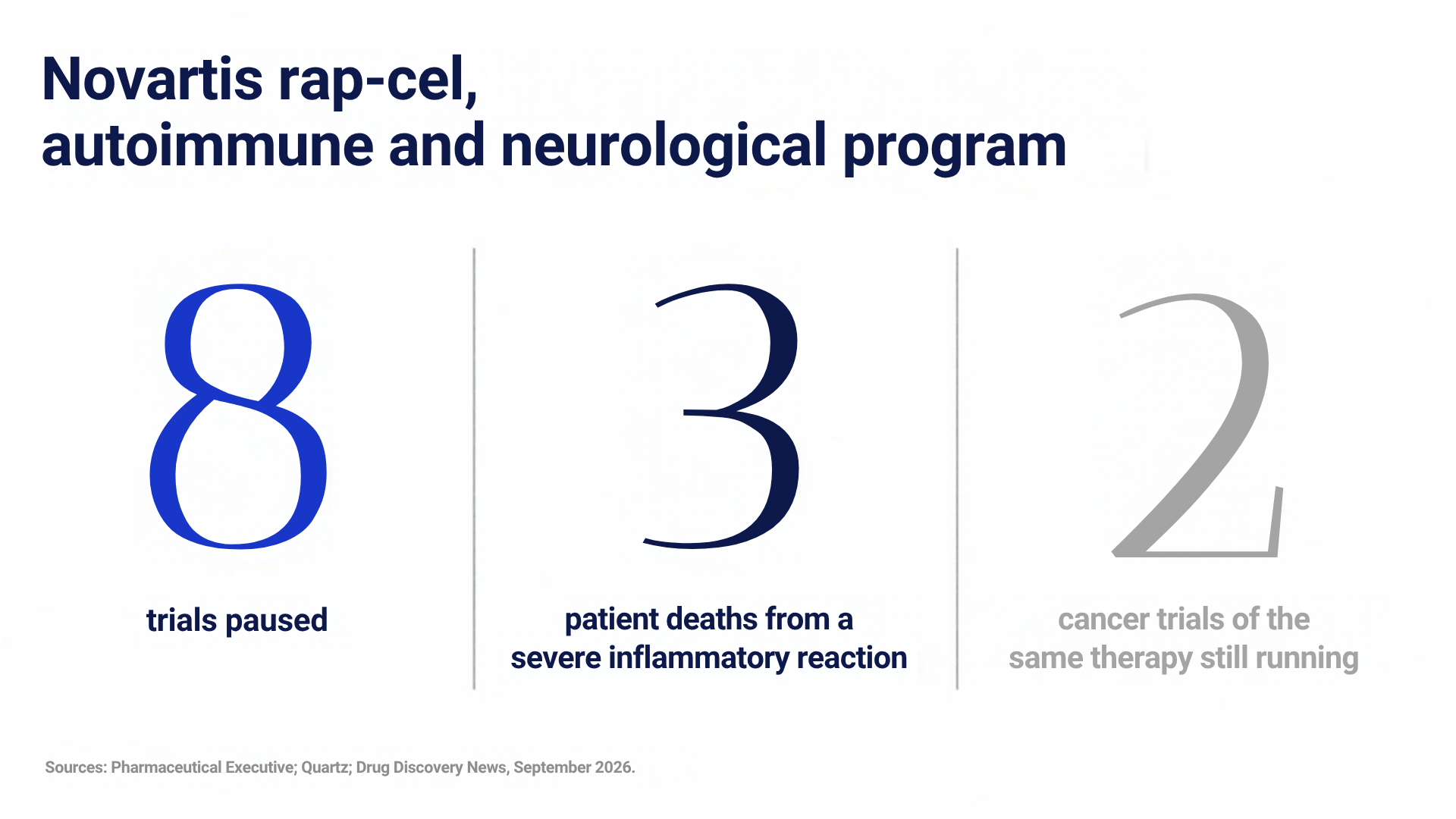
The pause came to light only after a William Blair analyst noticed that a cluster of Novartis studies had stopped activity in a public trials database. Novartis confirmed the deaths about a week later.
Autoimmune disease was meant to be the market that took CAR-T from a narrow cancer niche to far more patients. Many investors built positions on that idea through companies that use a single technology. The pauses show the weakness of that approach. A biological idea can be sound while one way of acting on it carries a risk that sinks every company built on it. Capital in biotech is safer when it follows the biology and spreads across the different ways of reaching it.
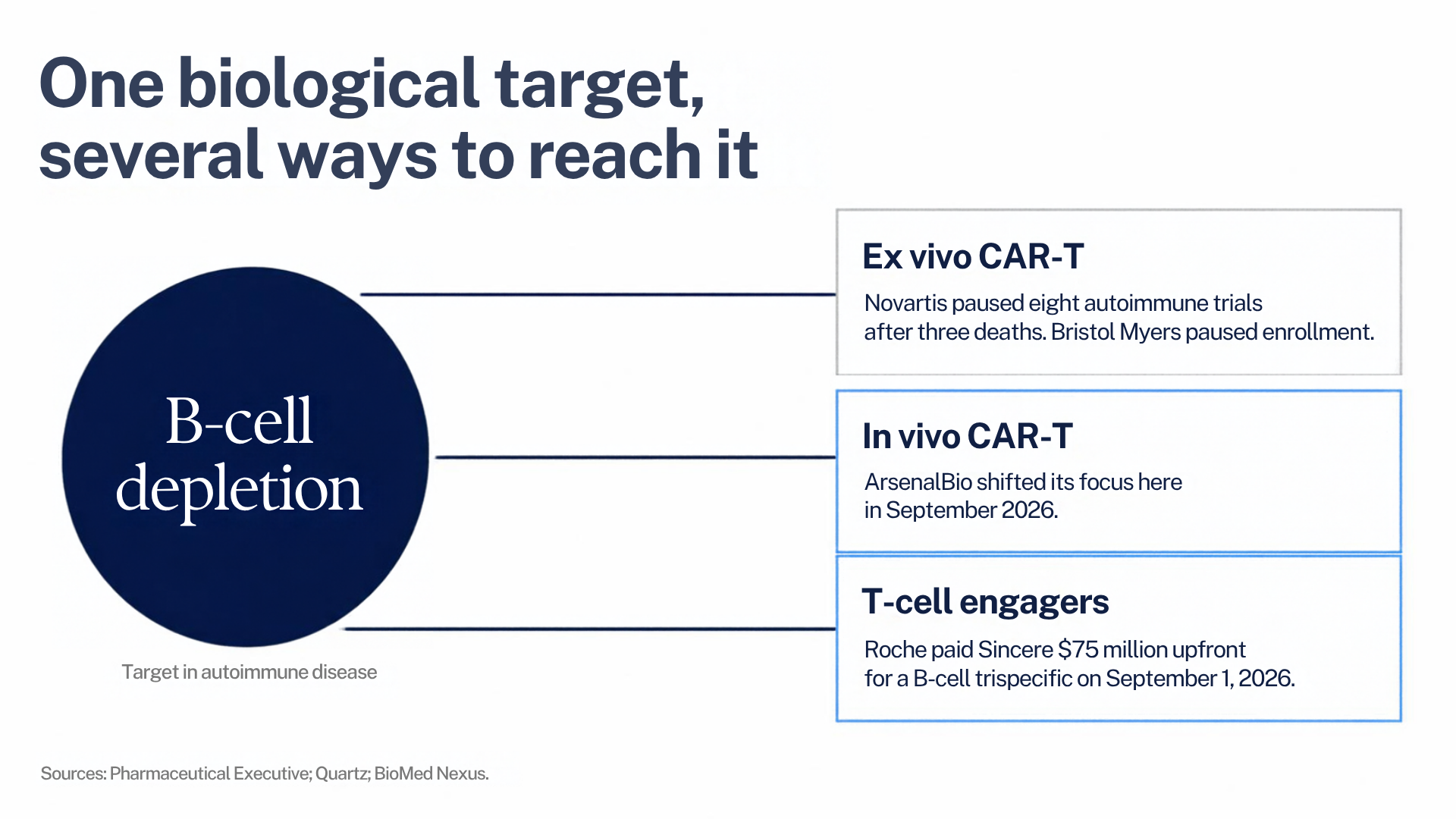
The idea behind autoimmune CAR-T is simple. In diseases like lupus, B cells drive the immune system to attack the body. If a therapy removes those B cells deeply enough, the immune system may reset. One patient described in Nature in April remained free of symptoms and off medication for more than a year after treatment.
CAR-T is only one way to remove B cells. In the version Novartis and Bristol Myers use, doctors take a patient's T cells, engineer them outside the body, and infuse them back. In vivo CAR-T aims to do the same engineering inside the body. T-cell engagers are off-the-shelf antibodies that link a patient's own T cells to B cells. Each approach targets the same biology, and each carries its own safety profile and manufacturing burden.
The Novartis deaths were linked to a known risk of cell therapy. They raise questions about one delivery method in one group of patients. They do not answer whether deep B-cell depletion works in autoimmune disease.
The response in the industry was fast. On September 1, the same day the pauses became public, Roche paid Simcere $75 million upfront for a B-cell trispecific T-cell engager. ArsenalBio, a cell therapy company, shifted its focus to in vivo CAR-T and cut 99 jobs.
Those two moves show capital staying with the biological idea while changing how it is pursued. Large drugmakers can do this inside one company, because they hold several approaches at once. A specialist investor with a portfolio of ex vivo CAR-T companies cannot. All of those holdings face the same question at the same time.
Cell and gene therapy has seen this pattern before. In 1999, Jesse Gelsinger, an 18-year-old volunteer, died in a gene therapy trial at the University of Pennsylvania. Regulators halted trials, and the field slowed for years. The underlying idea later produced approved medicines, but only after a long wait for anyone whose capital was tied to it.
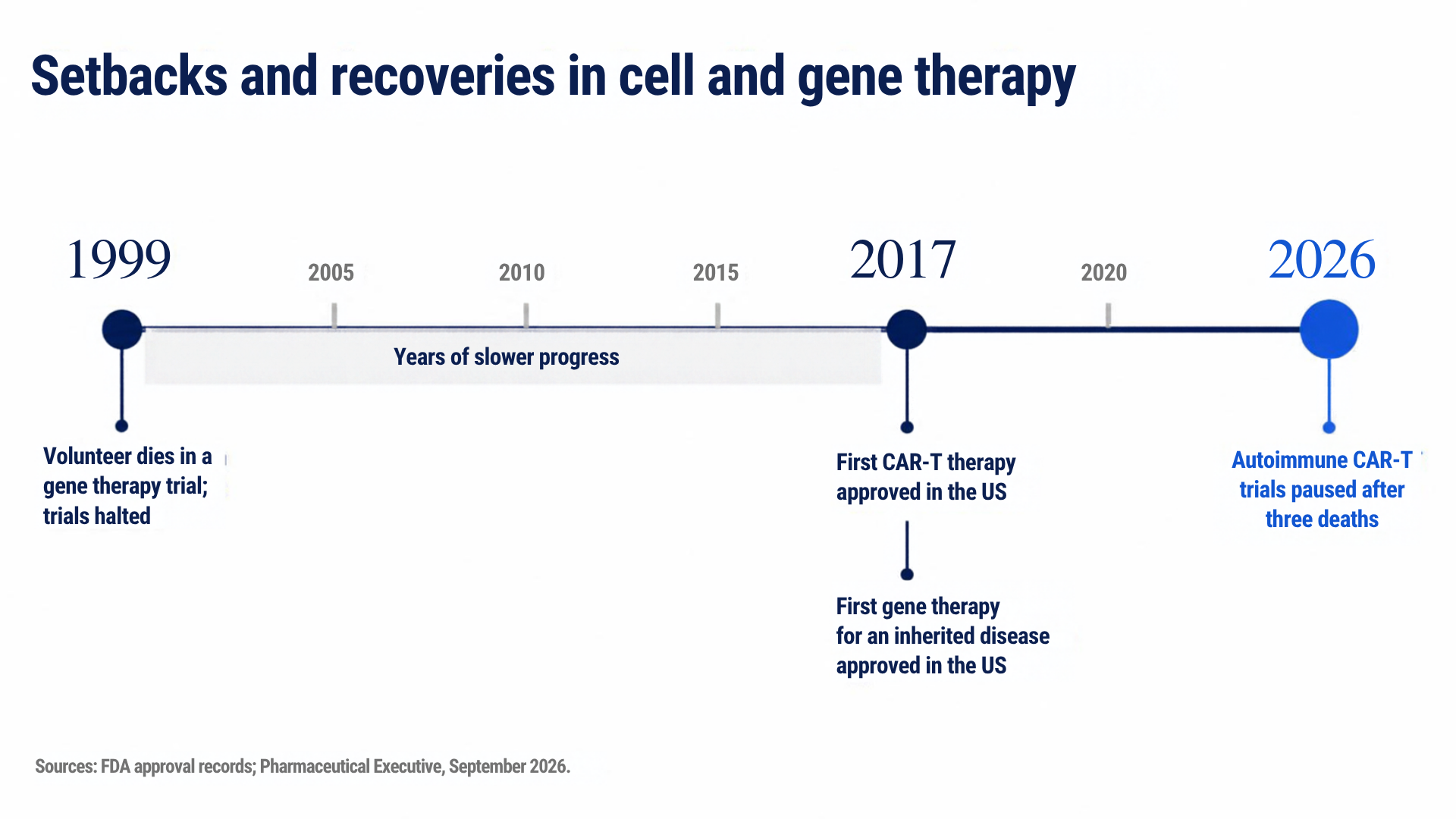
The lesson from 1999 is about timing more than science. A sound idea can take a decade longer than planned when its main delivery method suffers a safety failure. Capital that can move to a different method keeps its exposure to the idea without waiting out the delay.
The strongest objection is that specialist investors make their best returns by going deep. A fund that knows one technology better than anyone can pick winners within it and earn outsized gains when the field succeeds. Spreading across approaches can mean owning weaker companies just for balance.
Depth is valuable, and it can sit alongside breadth. An investor can know B-cell biology in depth and still hold that view through more than one approach. The risk lies in concentrating on a single method, and a single method can fail for reasons that have nothing to do with the biology.
The pauses suggest several practical steps for investors in biotechnology.
Start by mapping a portfolio by biological target and by delivery method, in two separate columns. A portfolio that looks diverse by company name can turn out to rest on one method. When most of the companies share one way of reaching their target, a single safety event can hit all of them at once.
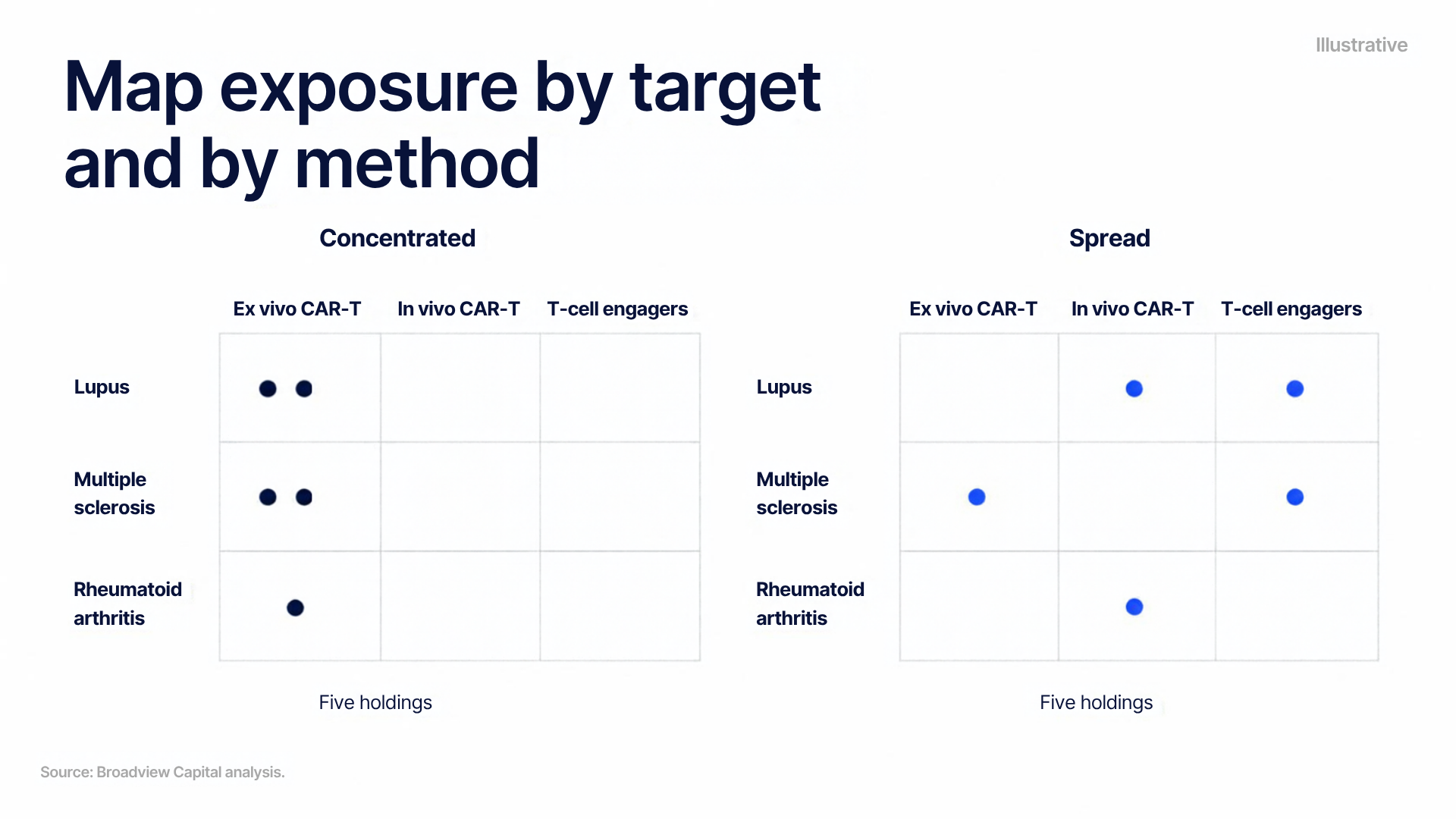
Pair approaches where the biology is strong. An investor convinced that B-cell depletion will work in autoimmune disease can hold programs in more than one of these approaches. If one approach stalls, the others keep the exposure alive, and they may gain from the setback as capital and partners move toward them.
Watch the public trial databases. The Novartis pause appeared in a registry before it appeared in any press release. Investors who track trial status changes directly see safety signals sooner than those who wait for company disclosures.
Consider the businesses that serve many approaches. Contract manufacturers and suppliers of research tools earn revenue whichever method succeeds, and a setback in one method rarely empties their order books.
The autoimmune opportunity has not disappeared with these pauses. What the pauses have shown is that the investors best placed to capture it will be the ones who backed the biology and did not tie their capital to a single method of delivering it.
A biological idea can be sound while one way of acting on it carries a risk that sinks every company built on it.
Sign up for our latest insights and firm announcements.
We respect your privacy and will not share your information.