
On September 21, Reuters reported that the US Treasury is drafting rules that would let American drugmakers keep licensing most new drugs from Chinese companies. The rules would exclude work related to pathogens or biotechnology that could be used as a weapon. They are not final, and Treasury was not expected to publish them before President Xi's visit to the United States.
Hong Kong biotech shares rose on the news. Innovent gained 7%, Akeso gained 8%, and the Hang Seng Biotech Index rose more than 5%.
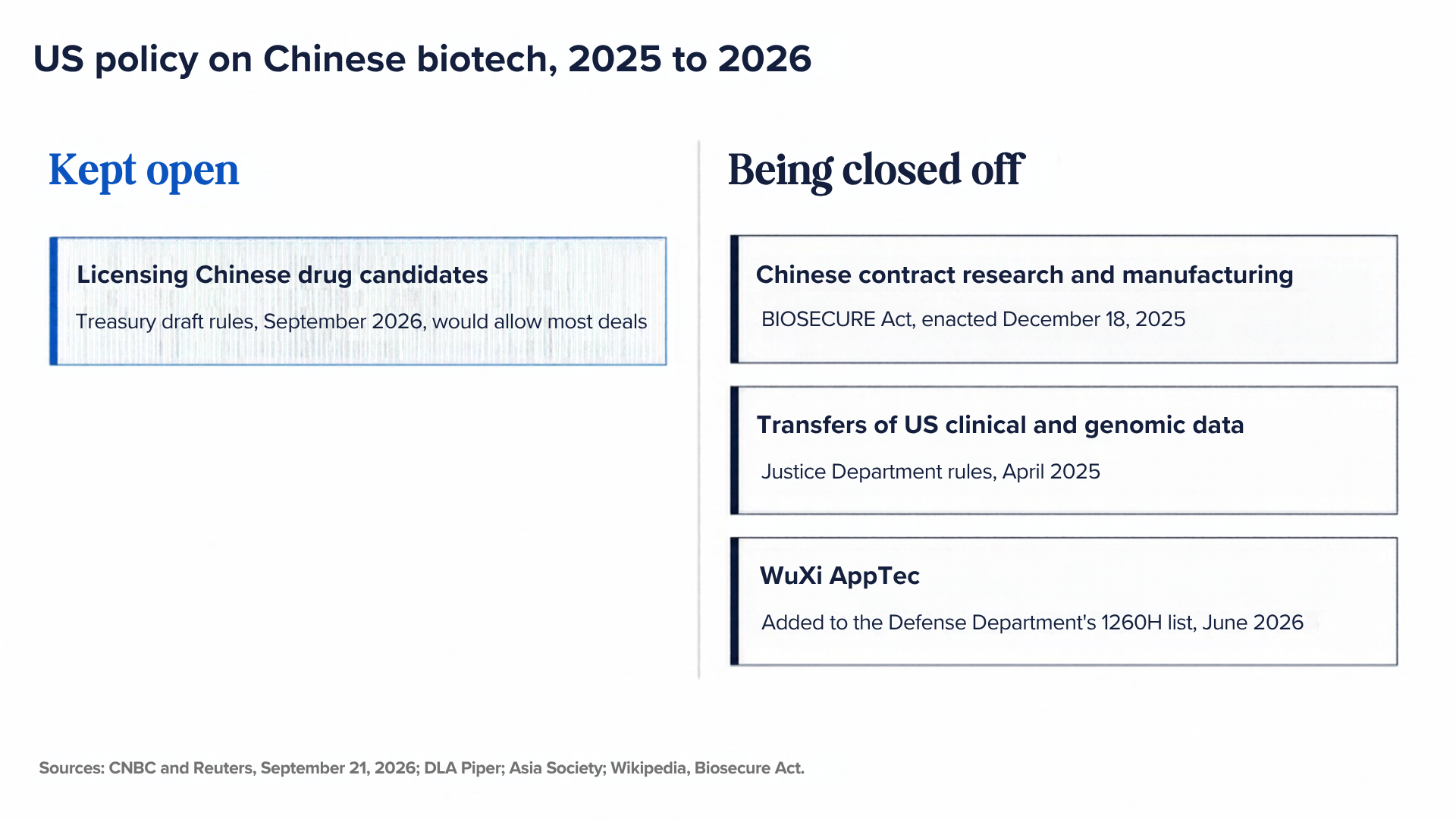
The market read the report as relief. We read it as the clearest sign yet of how US policy on Chinese biotech is taking shape. Washington is separating molecules from services. Licensing a Chinese drug candidate, which brings a new medicine into a US pipeline, is being kept open. Using Chinese contractors for research and manufacturing, and sending patient data to China, is being closed off step by step. That split will shape where drug value is created and captured for the rest of the decade.
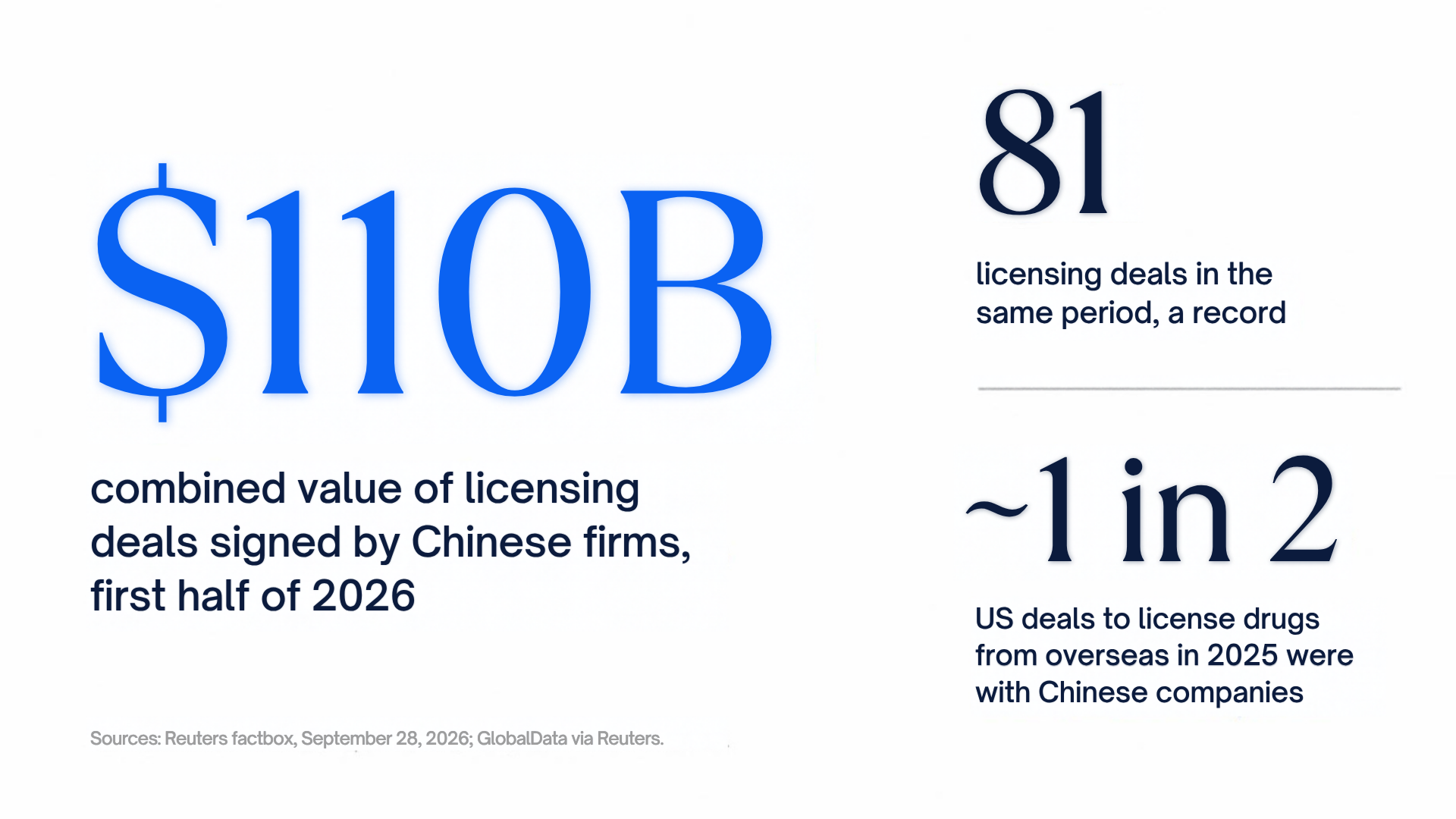
The licensing door matters because so much now comes through it. Almost half of US deals to license drugs from overseas in 2025 were with Chinese companies, according to GlobalData. In the first half of 2026, Chinese firms signed a record 81 licensing deals worth a combined $110 billion.
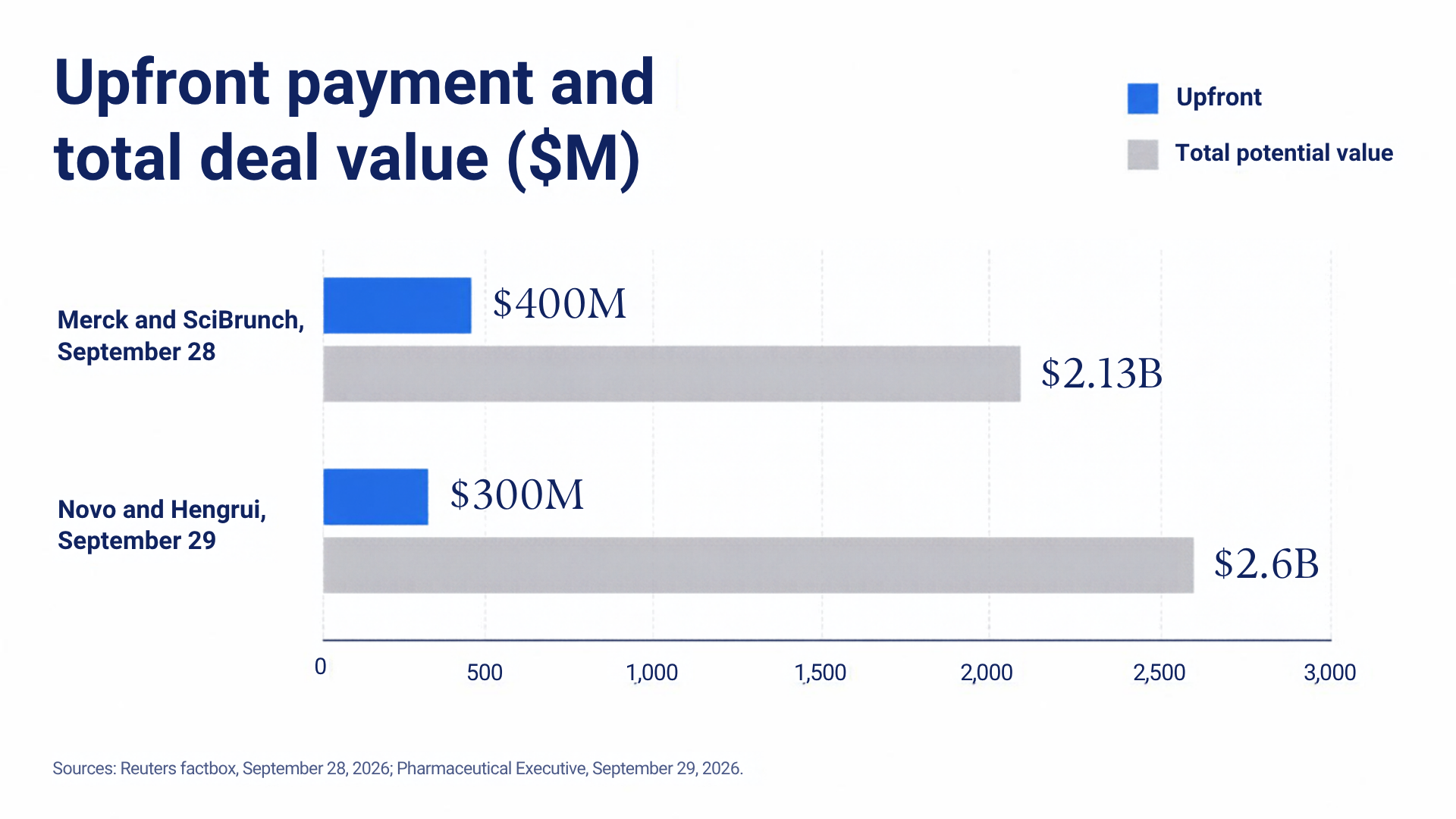
The pace held through September. On September 28, Merck paid China's SciBrunch Therapeutics $400 million upfront for a preclinical cancer drug that targets KRAS G12D mutations, in a deal worth up to $2.13 billion. A day later, Novo licensed Hengrui's once-weekly oral GLP-1/GIP drug for $300 million upfront and up to $2.6 billion in total.
PitchBook has reported that China now leads in producing promising early drug candidates, helped by the speed at which Chinese companies bring them into human testing. Large drugmakers rely on that supply to refill pipelines as their current products lose patent protection. Pfizer's chief executive has said publicly that licensing a drug developed in China does not create a national security risk.
The services side of the relationship is moving in the opposite direction. The BIOSECURE Act became law on December 18, 2025, as part of the defense authorization bill. It will bar federal agencies from buying biotechnology equipment or services from designated Chinese companies of concern, and from contracting with drugmakers that use those companies. In June 2026, the Defense Department added WuXi AppTec, one of the largest contract research and manufacturing groups in the world, to its list of Chinese military companies.
Patient data is also being fenced off. In April 2025, the Justice Department issued rules that tightened the transfer of US clinical trial and genomic data to China.
The BIOSECURE Act does not restrict licensing. A US drugmaker can still license a Chinese molecule. What it will find harder is using Chinese contractors to develop and make that molecule for the US market.
The history of the BIOSECURE Act is a guide to how the next rules may develop. The first version, introduced in 2024, named five Chinese companies directly, including WuXi AppTec and BGI. It passed the House in September 2024 but was left out of that year's defense bill. The version that became law a year later replaced the named list with a designation process, and it gave companies time to adjust.
The timeline is long. The Office of Management and Budget must publish the first list of designated companies by December 2026, and full enforcement is not expected until late 2028 or 2029. A court injunction has also delayed the designation of WuXi AppTec through the Defense Department's list.
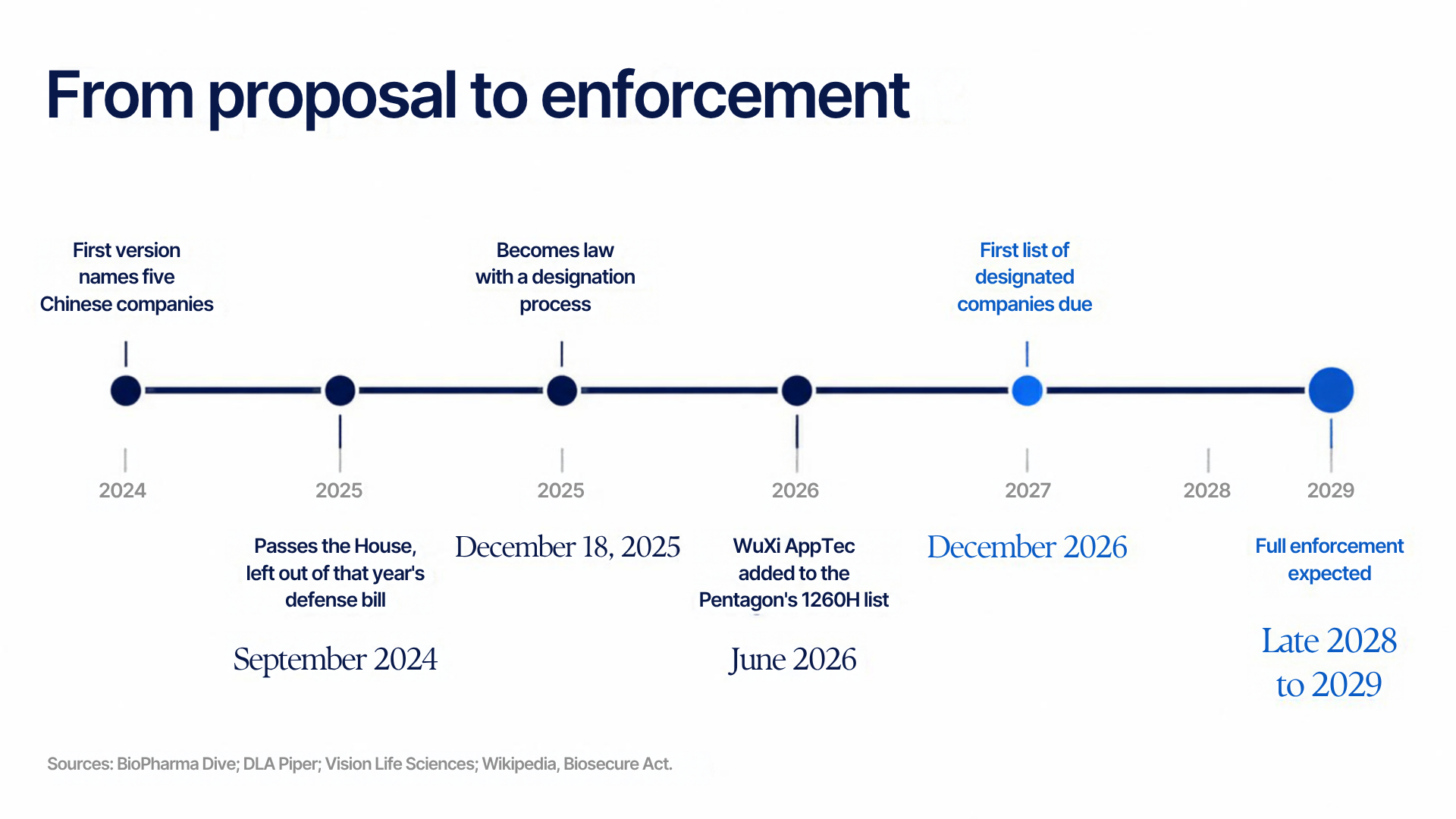
The pattern is consistent. Proposals start broad and name specific companies. The law that passes is narrower and slower, and it relies on a designation process. Drugmakers get time to move their supply chains, and licensing deals are left alone.
The strongest objection is that the Treasury draft is not the last word. A bipartisan bill, the Biotech Investment National Security Act of 2026, would subject licensing agreements, joint ventures, and equity investments involving Chinese companies to formal national security review. Its sponsors include senators and House members from both parties. The head of the industry group BIO has also described US leadership in biotech as a national security matter.
That risk is real, and it belongs in the price of any China-sourced asset. The BIOSECURE history suggests, though, that a review requirement is more likely than a ban. The largest US drugmakers depend on Chinese molecules to fill their pipelines, and Congress has shown that it prefers to slow and screen these ties rather than cut them. A review would add time and paperwork to each deal, and it would favor buyers with the resources to handle it.
If the Treasury approach holds, we expect four effects over the next two years.
The price of good early-stage assets from China will stay high, because the buyer pool remains global. Large drugmakers will keep paying hundreds of millions of dollars upfront for preclinical and early clinical molecules.
US early-stage biotechs will face direct competition from those assets. A US company with a molecule similar to a Chinese one will need better data or a faster route into trials to win a license.
Contract research and manufacturing work for US-bound drugs will keep moving out of China. CDMOs in the United States, Europe, India, and elsewhere in Asia stand to gain as drugmakers prepare for the BIOSECURE deadlines.
Deal terms will adapt to the policy risk. Buyers will seek clauses that protect them if a review blocks or delays a deal, and they will pay more for assets whose development and data can be moved outside China.
The result is a biotech market in which China supplies more of the ideas while more of the development and manufacturing moves elsewhere. Investors who follow that split will see where the next decade's margins in drug development are likely to sit.
Washington is separating molecules from services.
Sign up for our latest insights and firm announcements.
We respect your privacy and will not share your information.