
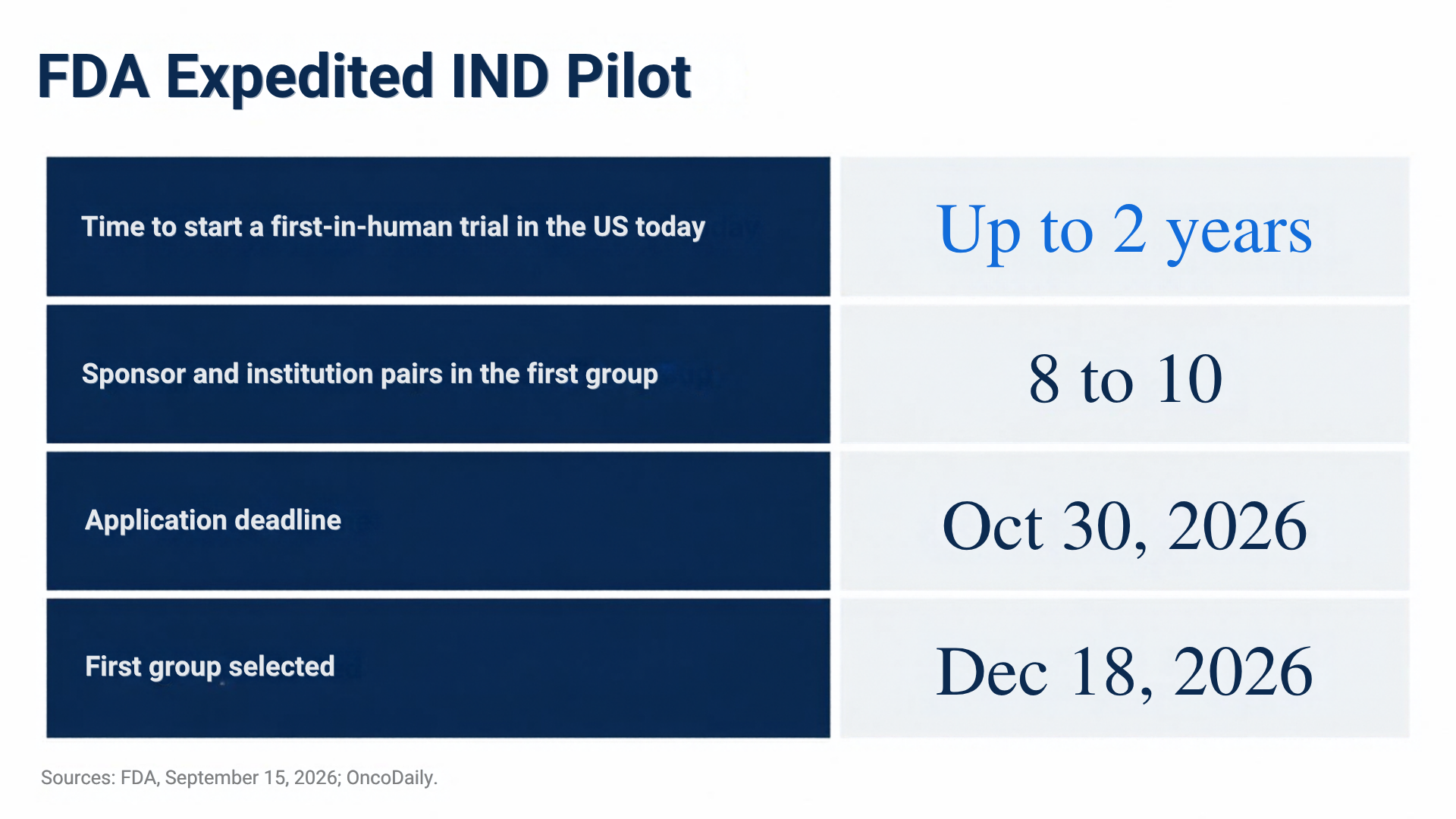
In the United States, moving a new drug from its final candidate to its first human dose can take up to two years, according to the FDA. Comparable trials start considerably faster in China and Australia.
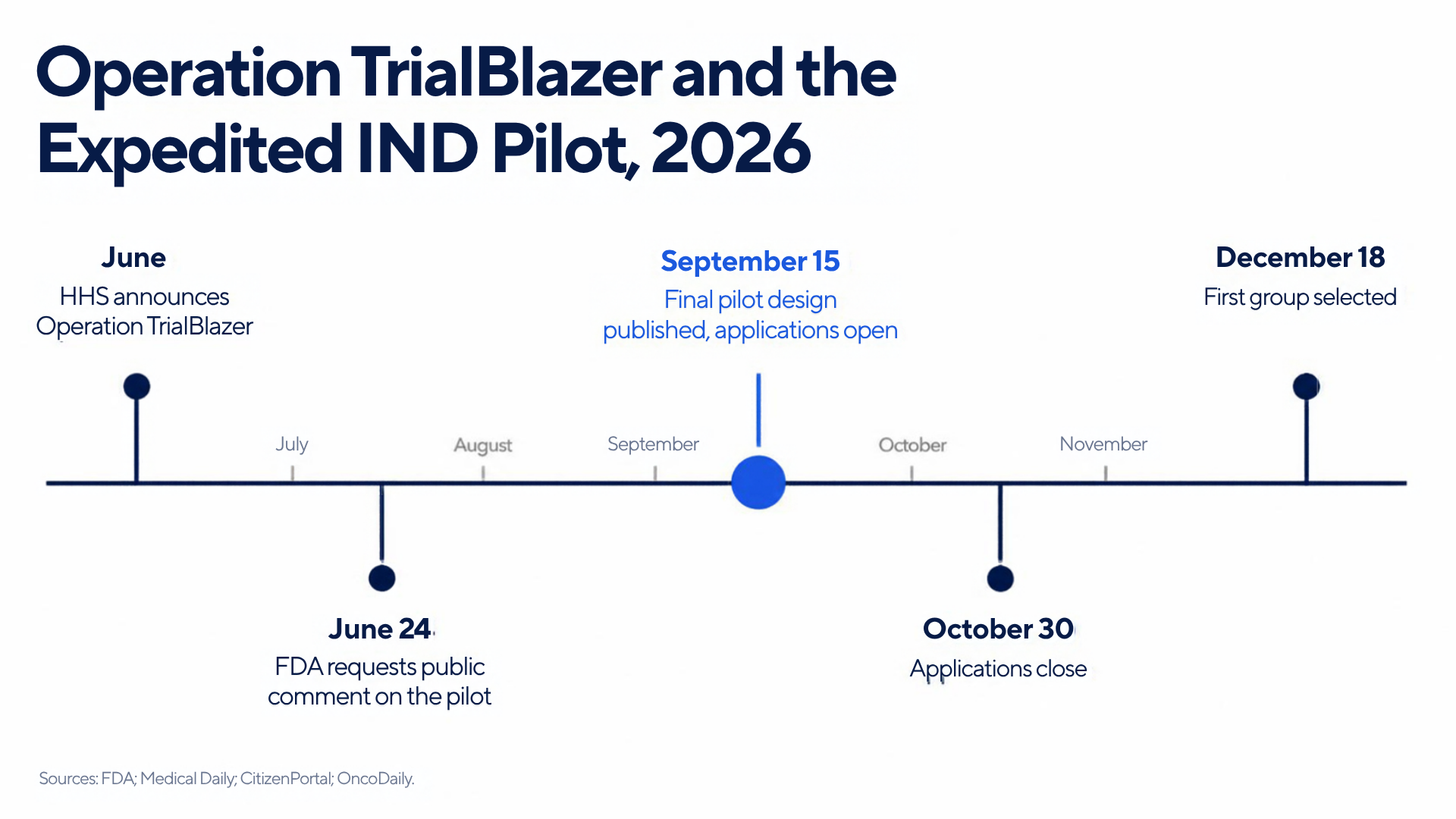
On September 15, the FDA launched the final design of its Expedited IND Pilot to close that gap. The pilot pairs drug sponsors with qualified research institutions and lets the agency review parts of an application before the full package is filed. It also encourages sponsors to run ethics review and trial site activation alongside the application, instead of one after another. Applications close on October 30, and the FDA expects to pick 8 to 10 pairs for the first group by December 18.
The pilot is small, and it changes no law. It matters because it targets the part of drug development where time is most expensive and least productive. A company that reaches first human data six months sooner raises money on better terms and spends less getting there. If the pilot's methods spread, they will change who wins early-stage drug development in the United States and how much that work costs.
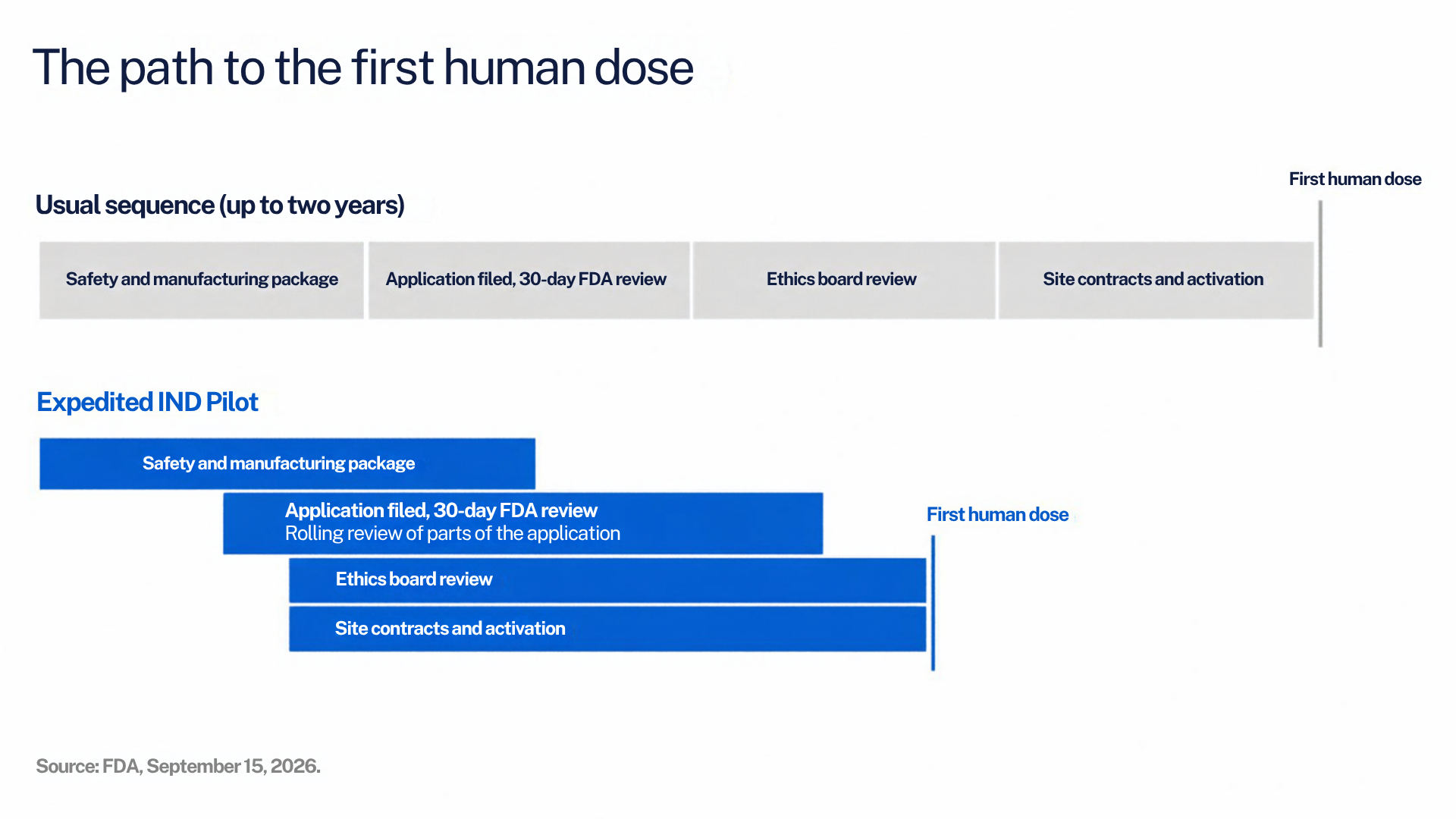
The FDA's formal review of a new drug application for human trials takes 30 days, and the pilot keeps that review in place. Most of the two years comes from what happens around it.
Before a trial can start, a sponsor must complete its safety studies and manufacturing package, file the application, win approval from an ethics board, negotiate contracts with trial sites, and activate those sites. In the usual sequence, each step waits for the one before it. A question from the FDA late in the process can lead to a clinical hold, which sends the sponsor back to fix the problem while the trial sits idle.
The pilot attacks that sequence. Rolling review lets problems surface while there is still time to fix them, which lowers the risk of a hold. Running ethics review and site work in parallel removes months of waiting. An FDA official described the goal as making the path to the first human trial faster, more predictable, and more collaborative.
The economics explain why this matters. Before a drug reaches people, a company spends money on animal studies and manufacturing, and it has little to show investors beyond those results. The first human data changes that. It shows whether the drug behaves in people as expected, and it is usually the point where an asset's value rises most sharply.
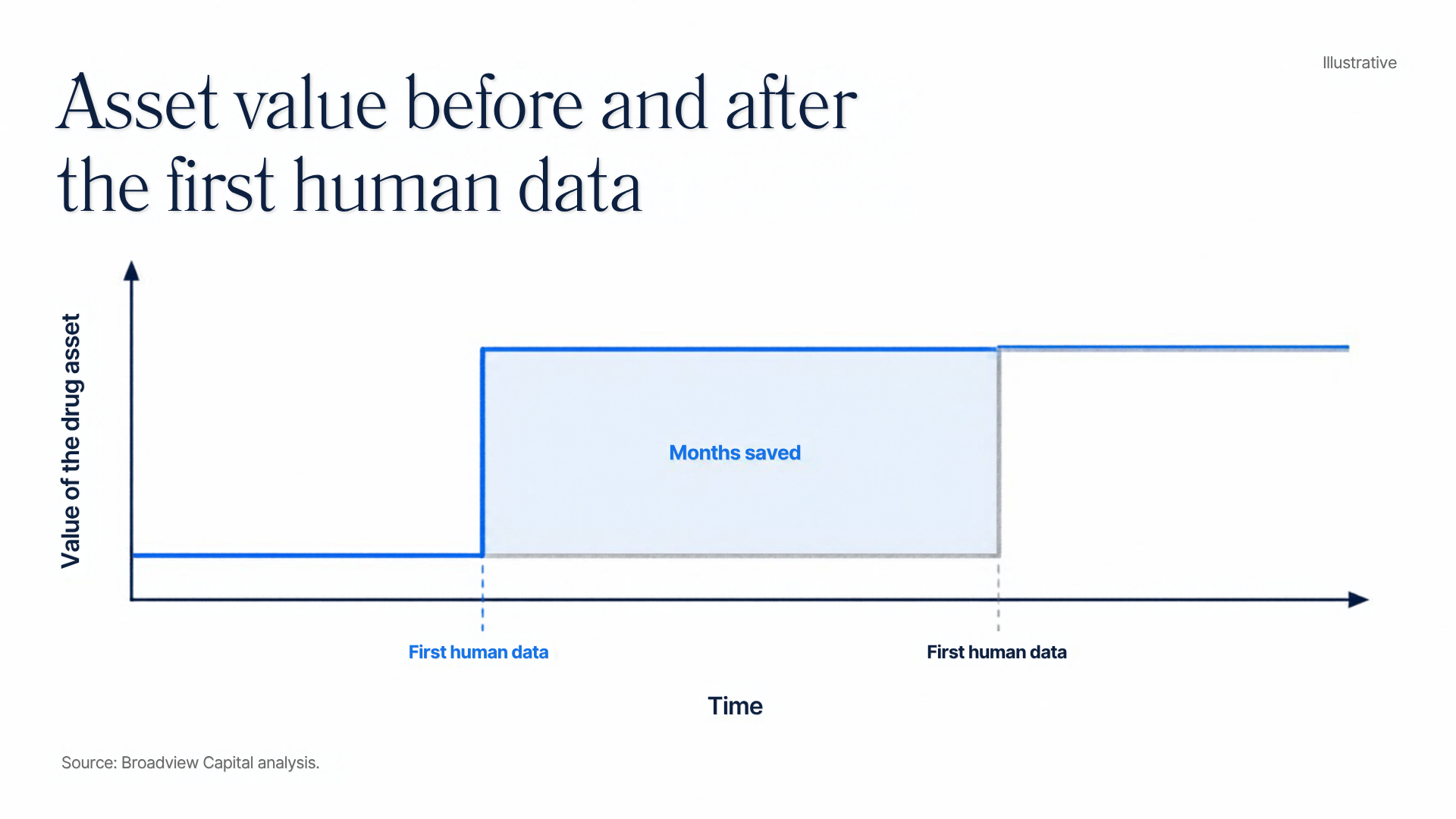
Every month before that point costs money with no new evidence to support the company's value. A small biotech running on venture funding pays its staff and its contract research bills each month. If it reaches its first data later, it either raises more money at a lower valuation or licenses its asset on weaker terms.
Large buyers feel the same pressure from the other side. They pay most for assets that already have human data, and they compete for them. A US asset that reaches that stage sooner is worth more to them, and it reaches them before a competing asset from elsewhere.
The pilot is part of a wider effort, Operation TrialBlazer, which HHS announced in June. One official speaking about it warned that the United States had about three years from 2025 to reverse the movement of early trials abroad before that shift could not be reversed.
Two countries show where that work has gone. Chinese companies move new medicines into human testing quickly, and PitchBook has credited that speed for China's lead in producing early drug candidates. Australia allows many early trials to begin after ethics approval, without waiting for a separate regulatory review, and it has become a common place for US biotechs to run first-in-human studies.
When a US company runs its first trial abroad, the money for clinical sites and local contractors goes abroad too. The FDA has also said it plans to increase its oversight of clinical trials conducted overseas.
The strongest objection is scale. Eight to ten pairs is a tiny share of the applications the FDA receives each year. The pilot is limited to commercial applications, and it does not change the legal standard for allowing a trial to proceed.
That is a fair description of the pilot, and it understates what pilots can do at the FDA. The Breakthrough Therapy designation, created in 2012, began as a narrow program for drugs showing early signs of major benefit. It became one of the most widely used paths in drug development, and it changed how sponsors planned their trials. The Expedited IND Pilot works the same way. Its most important output will be a tested method that sponsors and institutions can copy. Most of the delay is in coordination, and sponsors and institutions can adopt better coordination without a new rule.
The first group to gain is research institutions with strong early-trial capacity. The pilot puts them at the center, as partners that help sponsors build better applications and run trials quickly. Academic medical centers and dedicated early-phase units with fast ethics review and standard site contracts will be in demand.
Small sponsors gain next. Large drugmakers already have teams that run these steps in parallel. A small biotech usually does not, and a partner institution can supply that capacity. The FDA has said it will consider sponsor size and experience in its selection.
Contract research organizations that specialize in early trials in the United States stand to gain work that would otherwise go abroad. The countries that won early trials on speed will face more competition for US sponsors.
The pilot will also test the FDA itself. Rolling review takes more staff time early in the process. The model can spread only as far as the agency's reviewers can support it.
The two years between a candidate and its first patient are where the United States has fallen behind its competitors, and those two years now carry a large share of early-stage value. A small pilot aimed at that gap deserves more attention than its size suggests.
Every month before that point costs money with no new evidence to support the company's value.
Sign up for our latest insights and firm announcements.
We respect your privacy and will not share your information.