
On September 25, the US Department of Agriculture trimmed its forecast for food inflation. It now expects all food prices to rise 2.9% in 2026, close to the 20-year average of 3.0%. Grocery prices are forecast to rise 2.4%, and restaurant prices 3.5%. For 2027, the department expects grocery prices to rise only 1.8%.
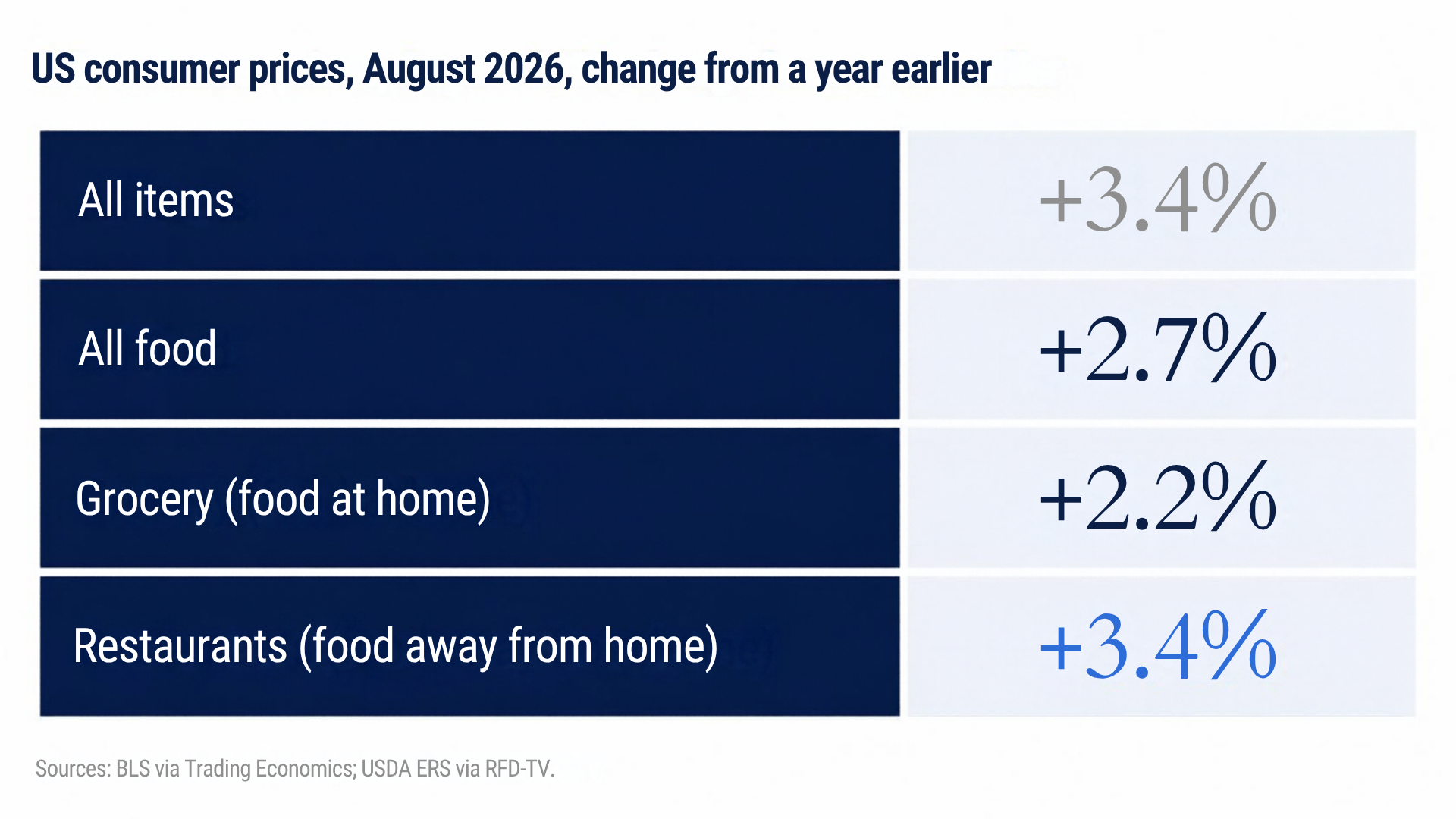
The latest consumer price data points the same way. In August, food prices were 2.7% higher than a year earlier, the slowest pace since March. Grocery prices rose 2.2%, while restaurant prices rose 3.4%. Overall consumer prices, by comparison, rose 3.4%.
Read quickly, the data says food inflation is back to normal. Read closely, it describes a food economy that has split in two. Inside the grocery store, collapsing egg prices are holding the average down while beef and coffee keep rising. Outside it, restaurant prices behave like service-sector inflation, driven by wages, and they are not slowing much. Each half sends a different signal to the companies that operate in it.
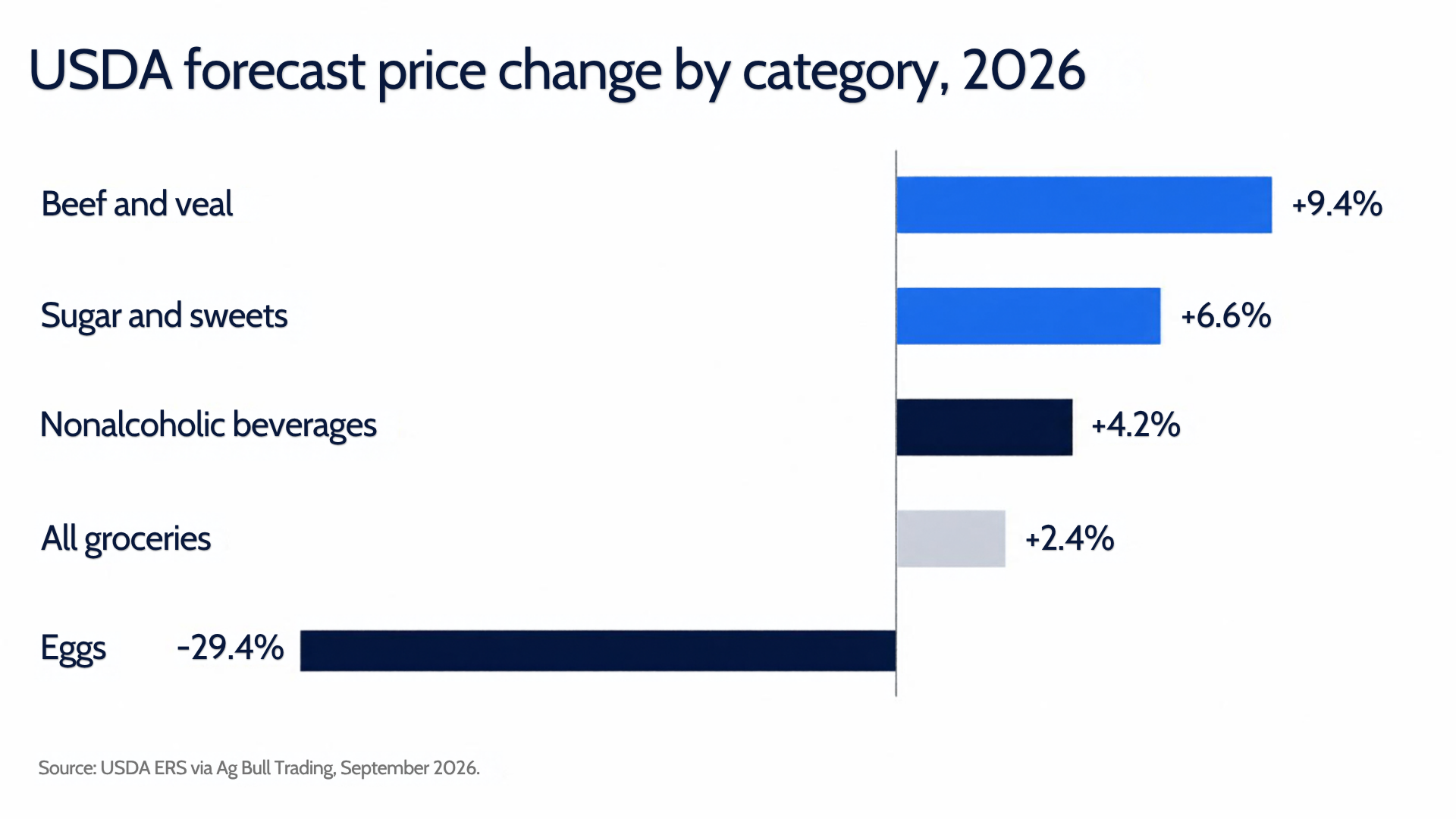
The grocery forecast of 2.4% is an average across very different categories. The USDA now expects egg prices to fall 29.4% in 2026, after the shortages caused by avian flu. That single category pulls the grocery average down sharply.
The other side of the basket is still rising. The USDA forecasts retail beef and veal prices to rise 9.4% in 2026. Sugar and sweets, a category that includes most chocolate candy, are forecast to rise 6.6%. Retail coffee prices were 6.1% higher in August than a year earlier, and nonalcoholic beverages are forecast to rise 4.2%.
Beef is the clearest case. Wholesale beef prices fell 4.1% in July and 3.0% in August, but they remained above last year's levels. The USDA still expects wholesale beef to rise 8.5% in 2026 and farm-level cattle prices to rise 7.1%. The US cattle herd has been small for several years, and rebuilding it takes time, so the pressure on beef prices is not likely to fade quickly.
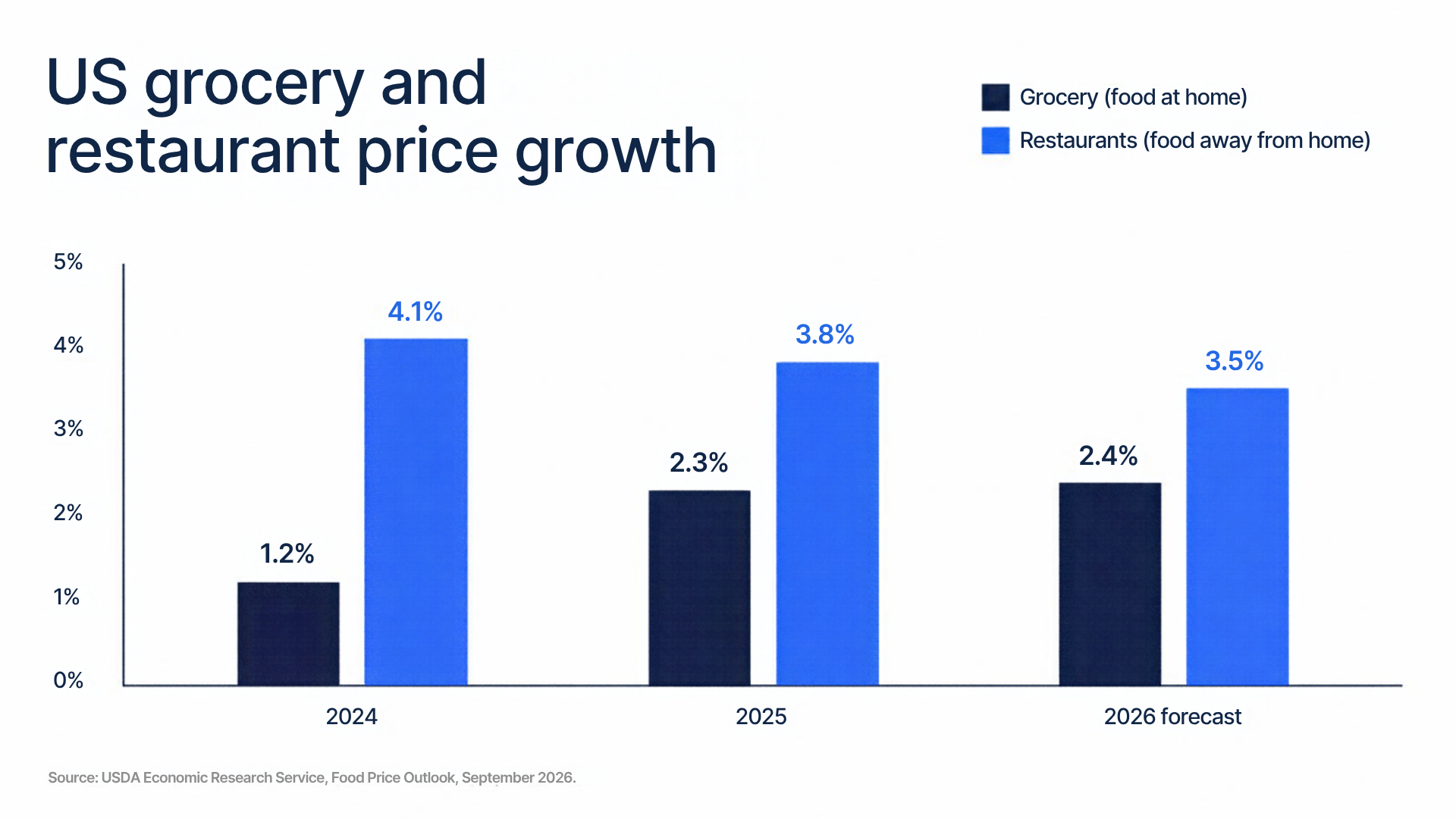
The second market is the restaurant. Restaurant prices have outpaced grocery prices every year since 2024. The gap was 4.1% against 1.2% in 2024, 3.8% against 2.3% in 2025, and a forecast 3.5% against 2.4% this year.
The reason is the cost structure. A grocery price reflects mostly the cost of the food itself. A restaurant price also carries wages and rent, and those costs do not fall when egg or commodity prices do. Restaurant inflation now behaves more like the rest of the service economy than like food.
This split is a recent pattern. From the 1970s to the early 2000s, grocery and restaurant prices rose at similar rates. In 2020, they still moved almost together, at 3.5% and 3.4%. In 2022, at the peak of the inflation surge, grocery prices rose 11.4% and restaurant prices rose 7.7%, as food commodity costs jumped faster than wages.
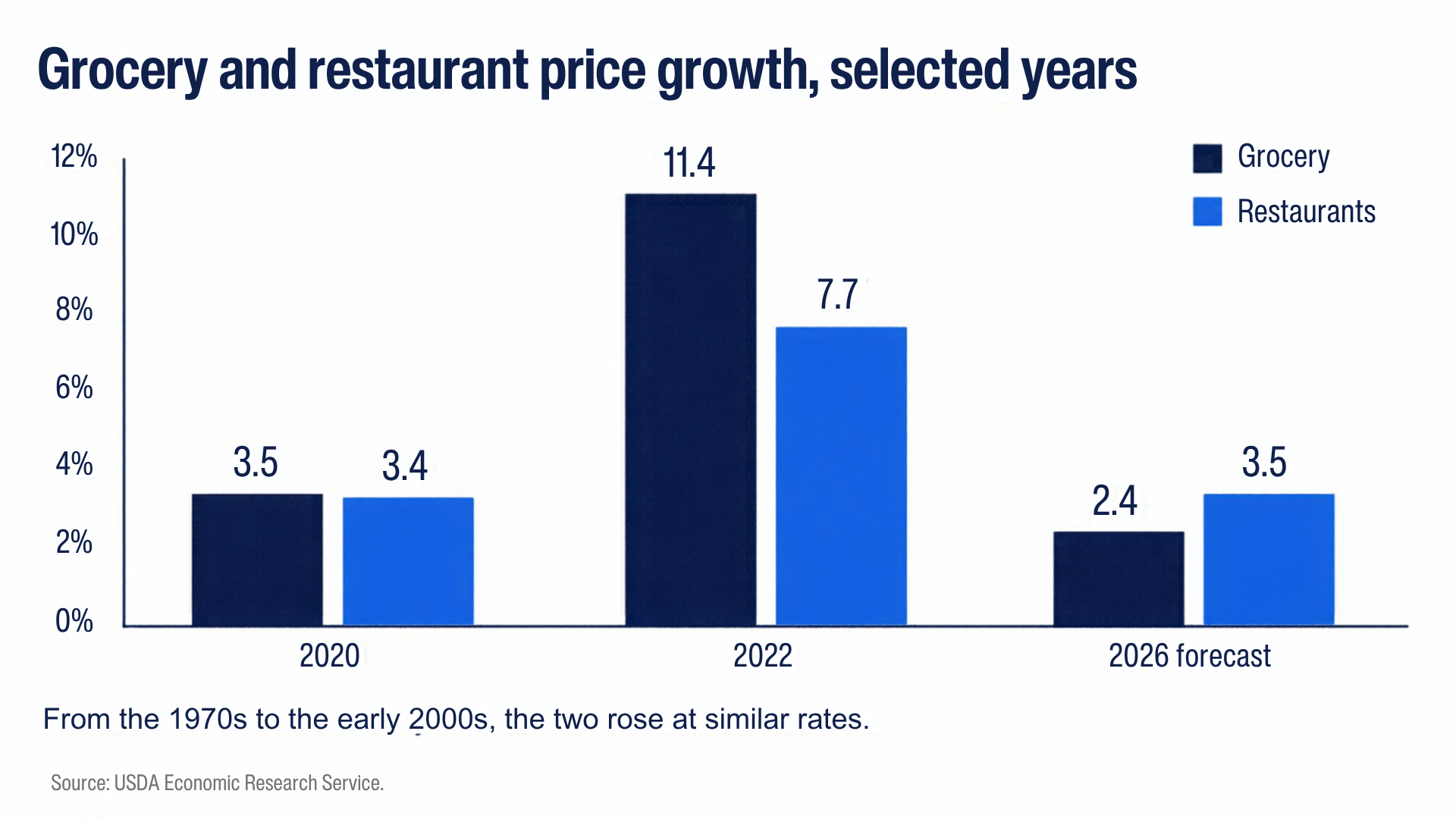
Since then, the order has reversed. Commodity costs have eased, while labor and occupancy costs have kept rising. Restaurants now face the higher inflation, and grocery shoppers face the lower.
The strongest objection is that the overall numbers are reassuring, and that is what matters for most food companies. Food inflation near its long-run average and a forecast of 1.8% for grocery prices in 2027 suggest a calm market. Category swings happen every year.
The averages matter for the economy. They matter less for any single company, whose costs and prices sit in specific categories. A beef processor or a burger chain faces 9.4% beef inflation, whatever the egg market does. A packaged food company selling into a market with 2.2% grocery inflation will find it harder to raise prices, even if its own ingredient costs are rising faster.
The current data points to several pressures in the year ahead.
Pricing power at the grocery shelf is weakening. Shoppers who see low grocery inflation will resist large price increases on branded products, and retailers will push back on suppliers who ask for them. Brands that rely on price increases to grow revenue will find 2027 harder than 2026.
Margins are under the most pressure where costs sit in the rising categories. Restaurants carry rising labor costs and high beef costs at once. Companies that make chocolate and beef products face input costs well above the grocery average.
The gap between eating at home and eating out is widening. As restaurant prices rise faster than grocery prices, more meals may move back into the home. That shift supports grocery retailers and the makers of prepared and convenience foods.
A food inflation rate near its long-run average looks like a return to normal. For the companies inside the food economy, what matters is which half of it they sell in.
A beef processor or a burger chain faces 9.4% beef inflation, whatever the egg market does.
Sign up for our latest insights and firm announcements.
We respect your privacy and will not share your information.