
On September 30, a GlobalData analyst told Just Food that one of the clearest early signals from GLP-1 users is that indulgence becomes more intentional. People taking the drugs still buy treats. They buy smaller amounts, and they choose them more deliberately. The same day, Food Business News reported that product developers rank meeting the needs of GLP-1 users among the top three trends shaping their work over the next 12 to 18 months.
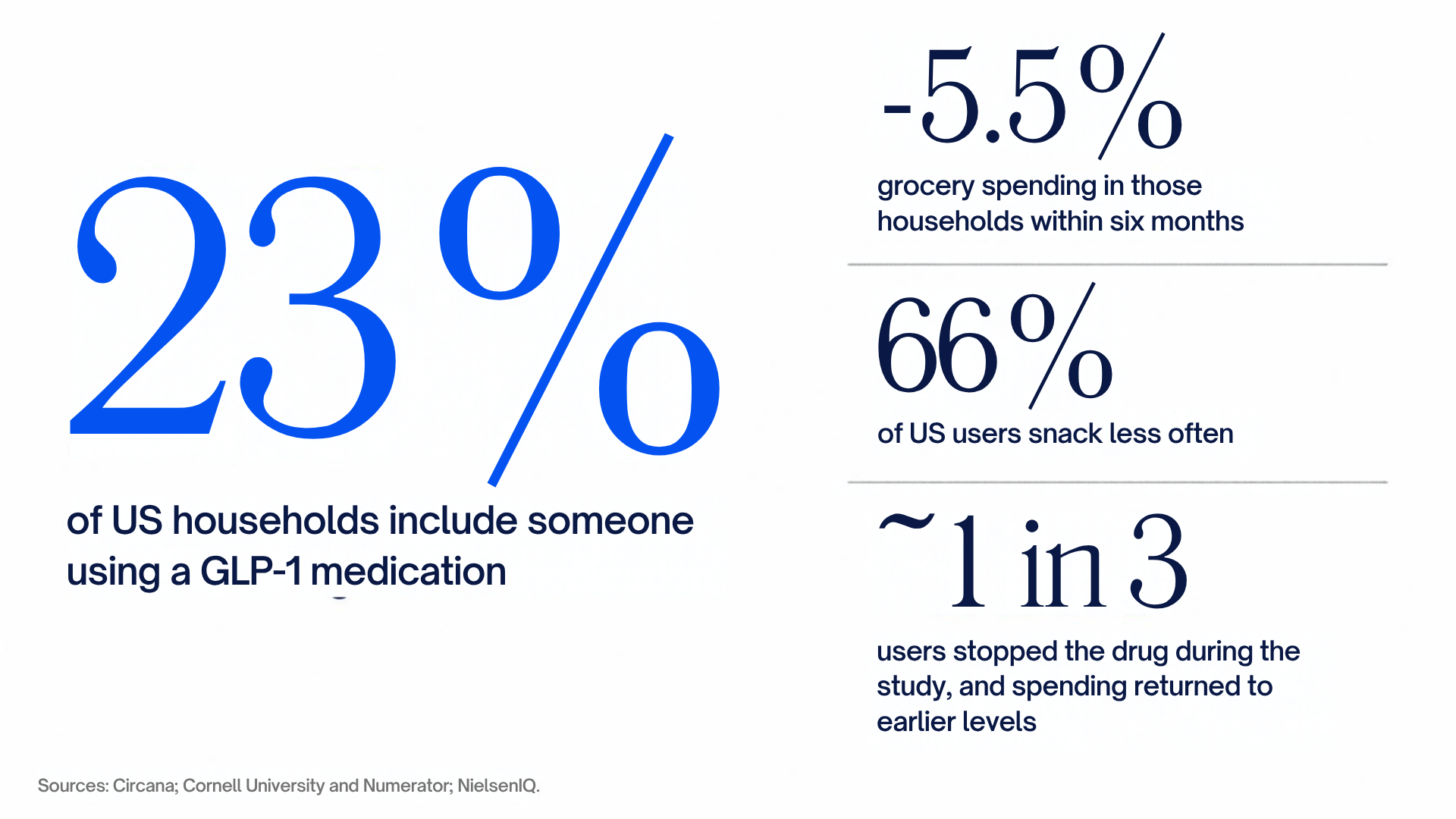
The reach of the drugs is now large. Circana has reported that 23% of US households include someone using a GLP-1 medication. Purchase data from Cornell University and Numerator shows that those households cut grocery spending by about 5.5% within six months of starting. Spending on chips and other savory snacks fell 11.5%, sweet bakery items 8.5%, and cookies 7.0%.
Most discussion of these figures focuses on lost volume. The deeper change is in how snacks are sold. Much of the snack business depends on unplanned purchases: the bag at the checkout or the multipack on promotion. A shopper with less appetite makes fewer of those choices. That shifts value in the sector away from impulse volume and toward products that people decide to buy before they reach the shelf.
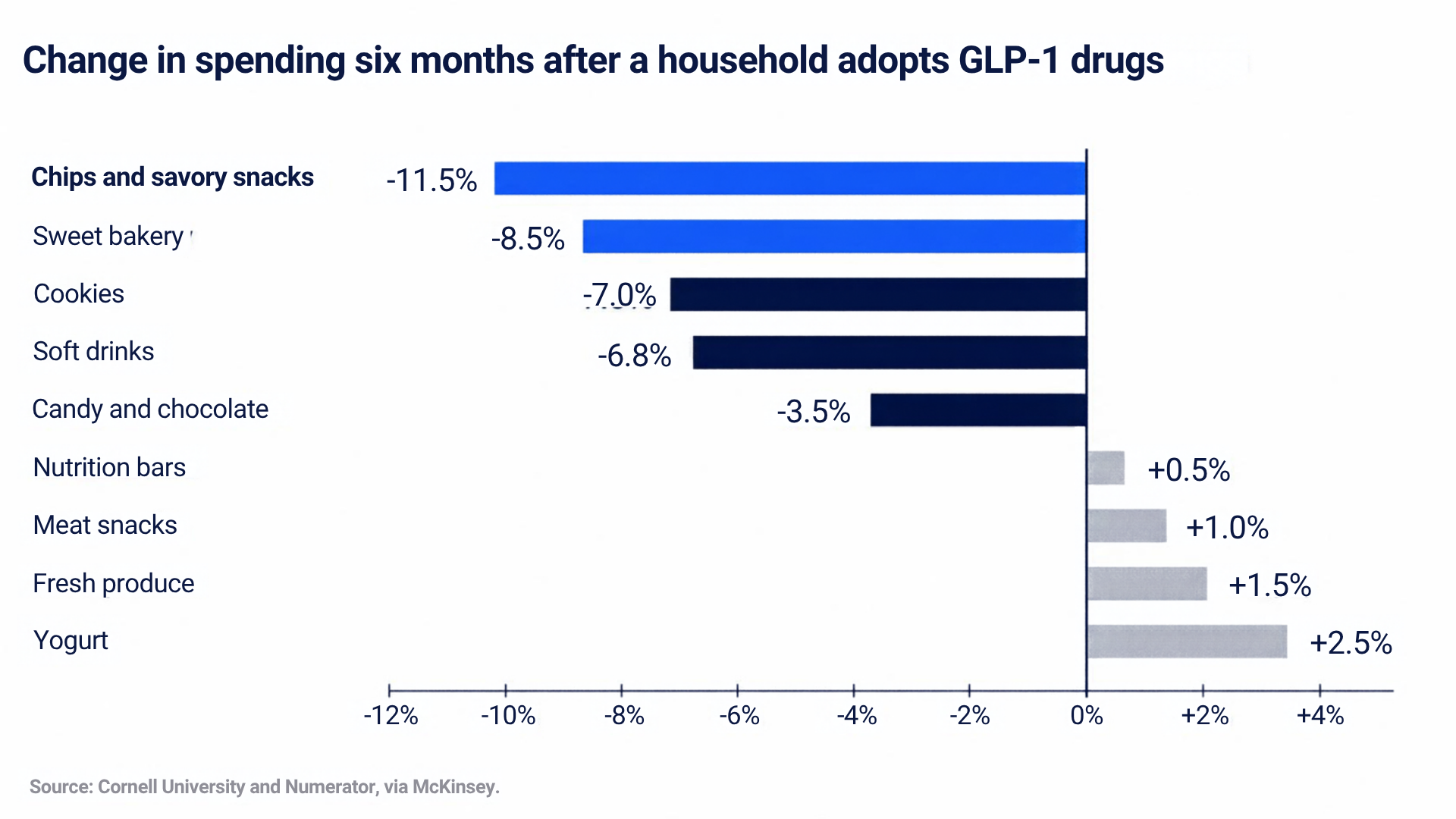
The Cornell and Numerator data shows which categories lose most. The largest declines were in chips and savory snacks, sweet bakery, frozen sides, cookies, and soft drinks. The study's authors noted that sweet bakery is a category often associated with impulse purchases, and it showed one of the largest drops.
A few categories gained. Yogurt rose 2.5%, fresh produce 1.5%, meat snacks 1.0%, and nutrition bars 0.5%. These are small increases, and they show that users cut more than they substitute. NielsenIQ reports that 66% of US GLP-1 users snack less often.
The effect is real for those who stay on the drugs, but it is not permanent for everyone. About one-third of users in the Cornell study stopped taking the medication during the study period, and their food spending returned to its earlier level.
Hershey's latest results show how volume and price can diverge in a snack business under pressure. In the second quarter of 2026, its net sales rose 6.6%. Price contributed about 12 percentage points of growth, mainly from increases in confectionery. Volume fell about 8%. Its US candy, mint, and gum sales at retail fell 8.6%, while its salty snacks business grew in volume.
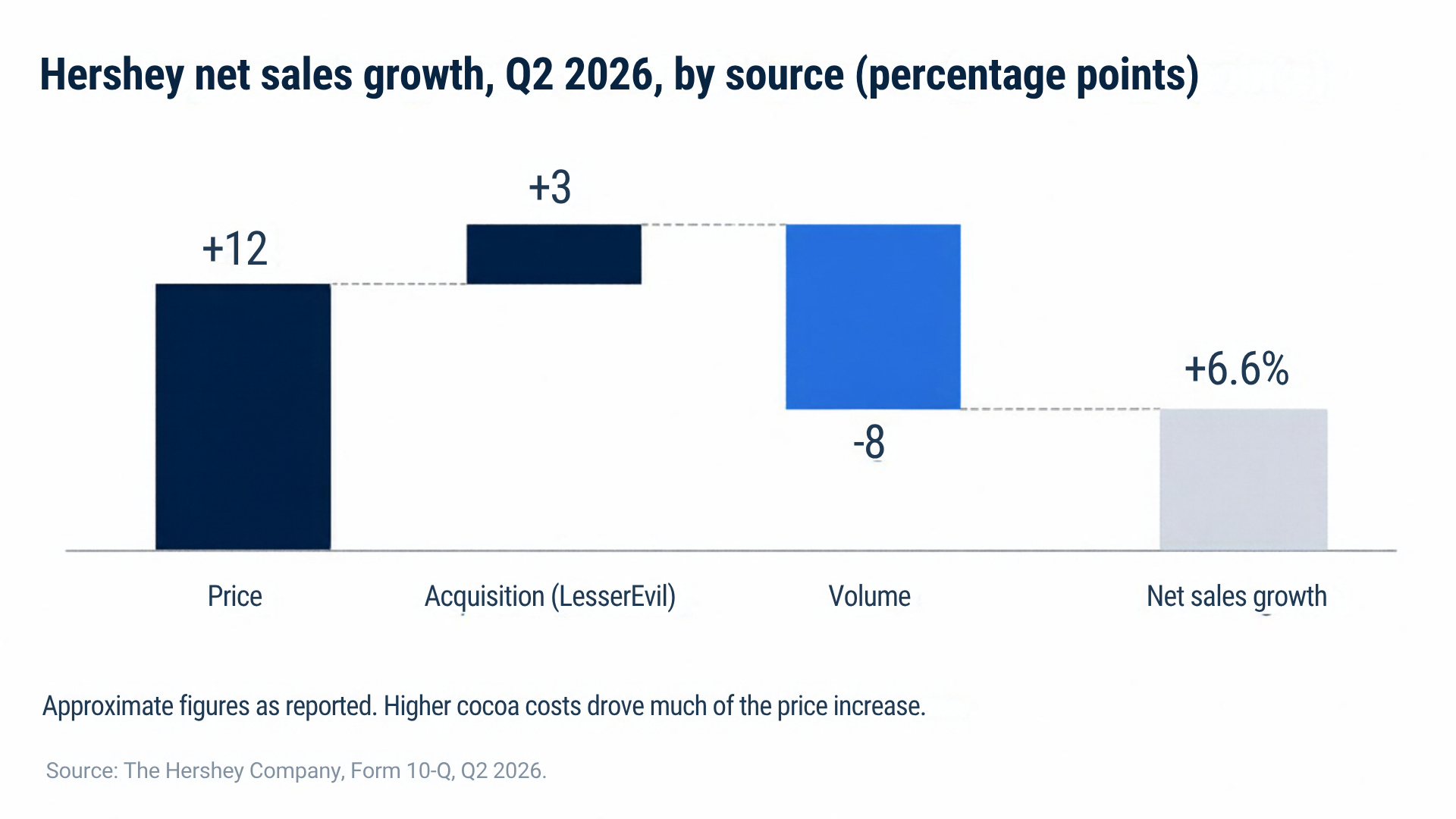
GLP-1 drugs are only one reason for those figures. Higher cocoa costs drove much of Hershey's pricing, and higher prices reduce volume on their own. The pattern still matters for the sector. When fewer units are sold, a manufacturer's fixed costs are spread over less output, and each unit costs more to make. Price increases can cover that for a time, but they also give shoppers another reason to buy less.
The food industry has faced a diet-driven shock before. In 2003 and 2004, the low-carbohydrate diet movement cut demand for bread, pasta, and sweet baked goods. Interstate Bakeries, then one of the largest US bread makers, filed for bankruptcy in 2004. Within a few years, the low-carb trend faded, and much of the lost demand returned.
The GLP-1 shift differs in one important way. A diet depends on willpower, while the drug acts on appetite directly. For as long as people take it, the effect is likely to persist. The comparison is useful as a warning in both directions. A company that cut capacity sharply during a short-lived diet trend would have been exposed when demand returned. A company that ignores GLP-1 drugs because the low-carb boom faded may misread a different kind of change.
The strongest objection is that company results show little damage. Hershey's chief executive described the effect of GLP-1 drugs as mild in 2024, and in 2025 said it had not grown. Overall food volumes are estimated to be only about 1% lower than they would be without the drugs.
That is accurate for the industry's total sales. It understates the effect on the parts of the sector that depend most on impulse purchases. A 1% decline in total food volume can sit alongside a 10% decline in savory snack spending among users. As adoption rises, the gap between those two numbers will matter more to the companies that sell the most affected products.
The move from impulse to intention is changing several parts of the sector.
Pack size and price per unit matter more. A shopper who wants a smaller treat will pay more per gram for a smaller pack. Brands that can sell fewer units at a higher unit price can protect revenue as volume falls.
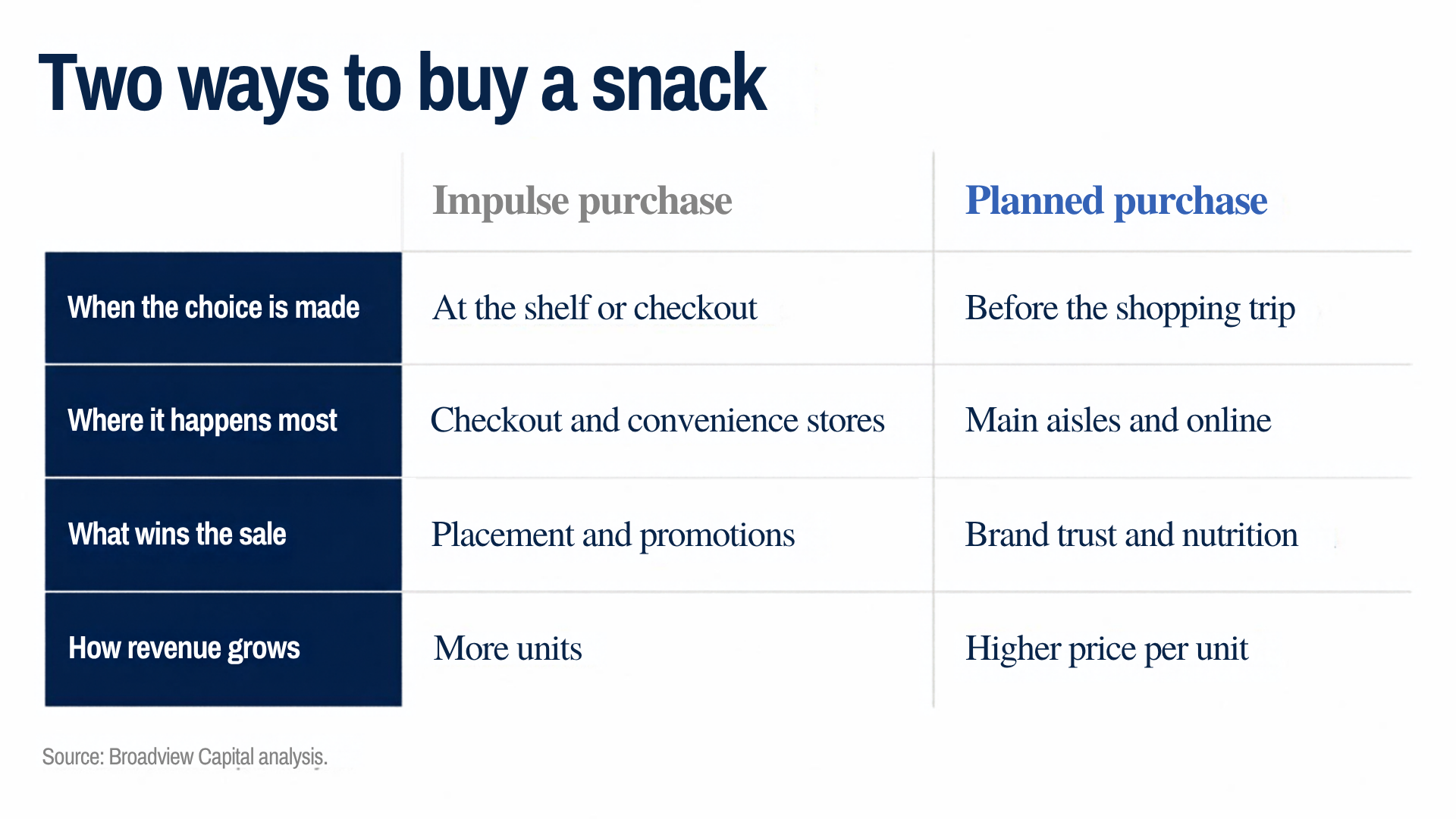
The checkout and convenience channels lose some of their power. These channels depend most on unplanned purchases. Planned purchases happen more often online and in the main aisles, where brand trust and nutrition claims influence the choice.
Large snack companies are buying their way into the categories that gain. Hershey acquired the better-for-you snack brand LesserEvil in 2025, which added about 3% to its second-quarter sales. PepsiCo bought the prebiotic soda brand Poppi for nearly $2 billion.
For most of its history, the snack business grew by putting products in front of people at the moment they were least likely to resist. GLP-1 drugs reduce how often that moment comes. The companies that do best will be the ones whose products people choose before they ever reach the store.
A shopper with less appetite makes fewer of those choices.
Sign up for our latest insights and firm announcements.
We respect your privacy and will not share your information.