
On September 25, KKR announced that its funds had completed the sale of 16 hotels across 11 Japanese cities, including Greater Tokyo, Osaka, Kyoto, and Fukuoka, to an unnamed global institutional investor. The hotels operate under Marriott's Four Points Flex by Sheraton brand. The terms were not disclosed.

KKR bought the portfolio from Unizo Holdings in 2024. In roughly two years, it renovated the hotels, worked with Marriott to launch the Four Points Flex brand in Asia Pacific, changed the management structure, and reorganized the hotel operating company. Then it sold the hotels.
The detail that matters most is what KKR kept. Its asset manager, KJRM, will continue to manage the portfolio for the new owner, and its operating platform, K+ Hospitality Management, will continue to run the hotels. KJRM also plans to work with the buyer to add more stabilized Japanese hotels over time. KKR sold the buildings and kept the businesses that create value in them. For investors in midscale hotels, that sequence is the most useful part of the deal.
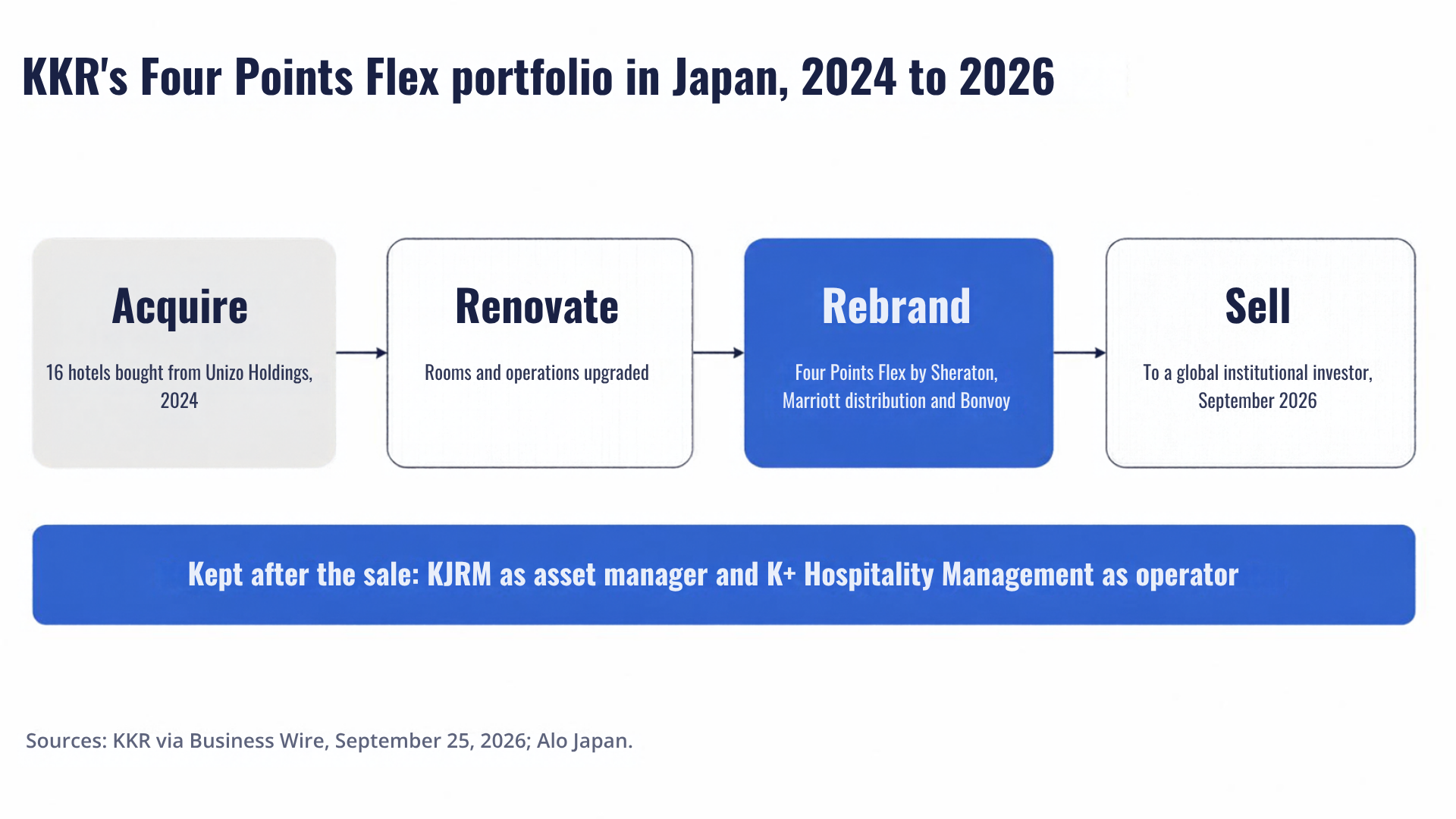
The hotels did not move, and their cities did not change. What changed was how they reached guests. Before the deal, they were a domestic portfolio with no global brand. After the conversion, they carried a Marriott name and appeared in Marriott's global booking system. Guests could also earn and redeem points there through Marriott Bonvoy, one of the largest loyalty programs in travel.
That matters most in a market driven by international visitors. Japan received a record 42.68 million foreign visitors in 2025. A traveler from Seoul or Sydney who searches for a hotel in Fukuoka is far more likely to find and trust a brand they already know. A global brand gives a midscale hotel access to that guest at a cost that an independent hotel cannot match.
Midscale hotels are also easier to convert than full-service ones. They run with smaller staffs and fewer restaurants, so a single brand standard can be applied across many properties at once. That makes a portfolio of 16 hotels a practical unit for one renovation program.
The buyer is a different kind of investor from the seller. KKR took on the work that carries the most risk, which was the renovation and the rebranding. A large institutional investor wants the result of that work, which is a portfolio of branded hotels in several cities with one operating standard and steady income.
This division of labor is common in real estate, and it rewards each side for what it does best. The value-add investor earns its return from the change in the asset. The institutional buyer earns a steady yield from the stabilized asset. The price gap between the two is the reward for the conversion work.
The history of this portfolio shows how long foreign capital has been interested in Japanese hotels. Unizo Holdings, the previous owner, was the subject of a contested takeover battle in 2019 and 2020 that drew bids from several international investors before ending in an employee-led buyout. The hotels that KKR bought in 2024 were part of that history.
What stands out now is the exit. KKR's approach builds local businesses, an asset manager and an operator, that can repeat the process with new portfolios. That turns a single trade into a platform.
The strongest objection is that Japan's tourism boom may be close to its limit. Japan received about 21.1 million foreign visitors in the first half of 2026, 2.0% fewer than in the record first half of 2025, mainly because travel from mainland China fell sharply. JTB forecasts 41.4 million visitors for the full year, slightly below 2025, and notes that the boost from the weak yen has started to fade.
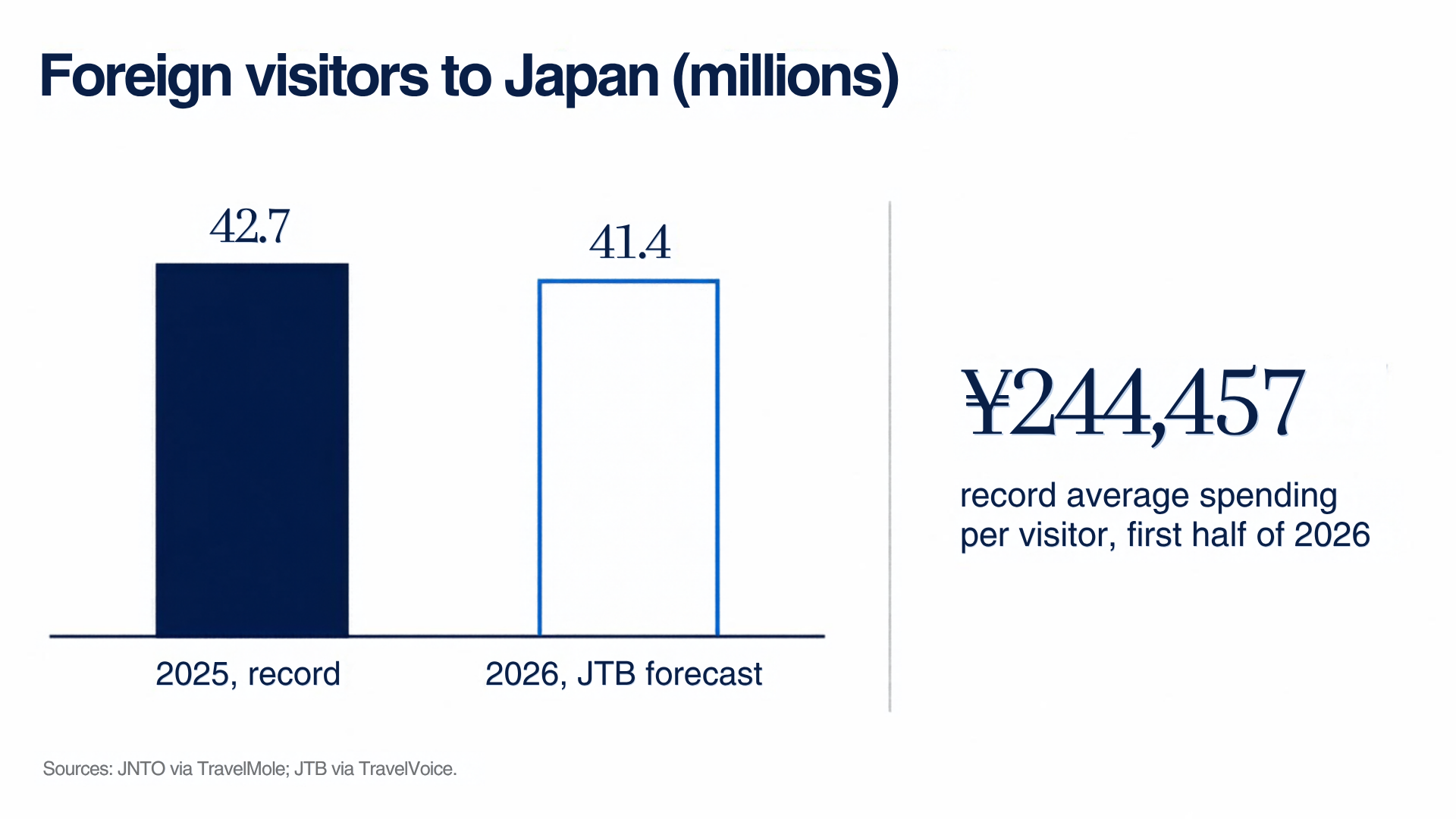
These are real risks, and they belong in any underwriting. The same data also shows a market that is changing more than shrinking. Visitors from South Korea rose 18.6% to 5.7 million in the first half, and visitors from Taiwan rose 20.9%. Excluding mainland China, Japan had a record half-year. Average spending per visitor also reached a record ¥244,457.
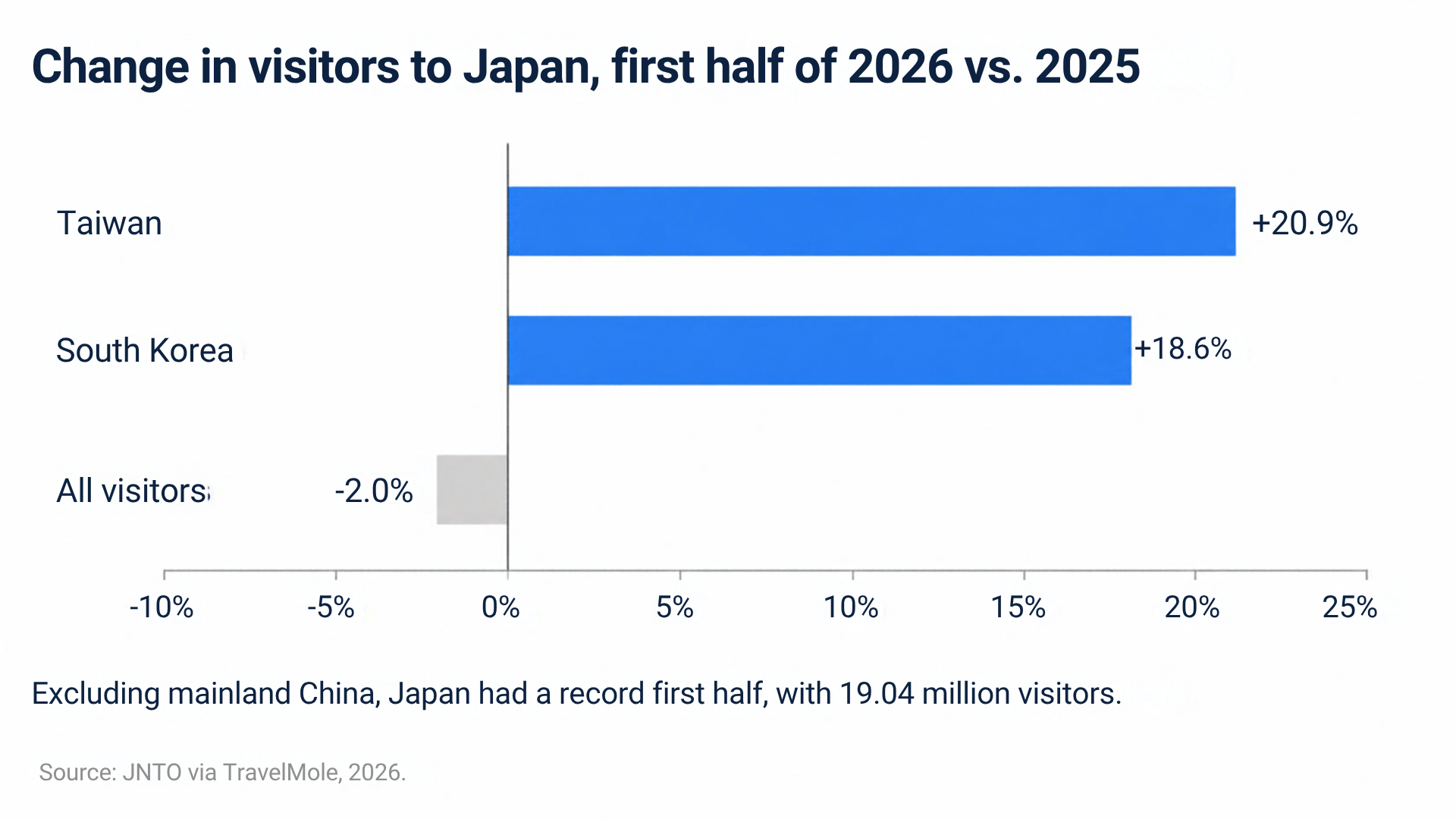
A branded midscale portfolio is well placed for that shift. Its guests come from many countries, through a global booking system, and it does not depend on one source market.
The deal suggests several lessons for investors in hotels.
First, look for value in distribution. A well-located hotel that lacks a strong brand or booking channel can gain value through conversion alone, without new construction. The return comes from connecting the hotel to guests it could not reach before.
Second, keep the platform when selling the buildings. An asset manager and an operator that stay after a sale earn fees from the new owner, and they bring the next deal. KJRM's stated plan to add stabilized hotels for the buyer shows how a platform turns one exit into a pipeline of future work.
Demand should also be underwritten by source market. In a market that depends on international visitors, the mix of countries matters as much as the total. A portfolio that serves many markets through a global brand is less exposed to a sudden drop from one country, as Japan saw with China this year.
KKR sold 16 hotels in September. It kept the asset manager and the operating company that made those hotels worth more. In midscale hospitality, that may prove to be the more valuable half of the trade.
KKR sold the buildings and kept the businesses that create value in them.
Sign up for our latest insights and firm announcements.
We respect your privacy and will not share your information.