
Each time a bedside nurse leaves, the average US hospital spends $60,090 to replace her, and in 2025 more nurses left than the year before.
On September 21, Ascend Learning bought M7 Health, whose AI platform forecasts staffing demand and fills gaps in hospital schedules. The deal is the latest in a run of workforce purchases that Ascend began with Clover Learning in March 2025. Ascend now owns tools that follow a clinician from training to the daily shift.
Most coverage treats deals like this as software news. We read this one as a sign of where hospital economics now turn. Labor is the largest cost a hospital controls, and the schedule decides how much of it goes to premium pay. A vendor that holds data on a nurse from the classroom to the shift can forecast both patient demand and staff departures. Hospitals that use that data well will staff more beds with the same people. The rest will keep paying agency rates to cover the gap.
Each of Ascend's recent purchases covers a different stage of a clinician's career. Clover Learning trains diagnostic imaging staff. StaffGarden manages the competency records and career ladders that decide who can work on which unit. Laudio, bought in September 2025, gives frontline nurse managers tools to track their teams. M7 adds the forecast and the schedule itself.
Taken together, these products answer the two questions that set a hospital's labor bill. The first is how many nurses each unit will need next week. The second is which of today's nurses will still be there next year.
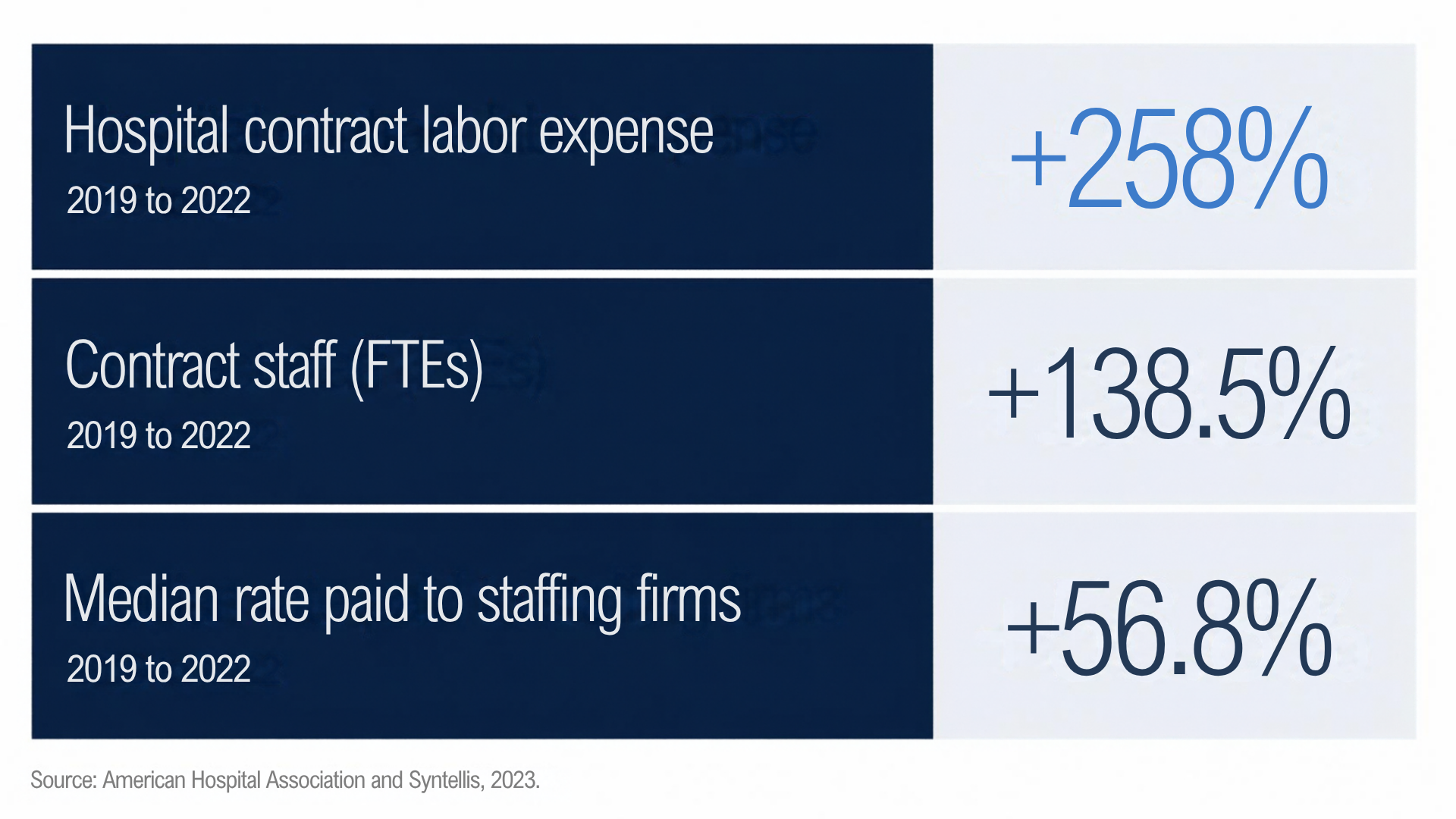
Hospitals learned what a staffing gap costs in the three years after 2019. A report by the American Hospital Association and Syntellis found that hospital spending on contract labor rose 258% between 2019 and 2022. The number of contract staff rose 138.5%, and the median rate that hospitals paid staffing firms rose 56.8%. Nursing took 46% of all contract hours in 2022.
The lesson was simple. When a hospital waits until a shift is empty, the market sets the price of filling it, and it sets that price at the worst possible moment.
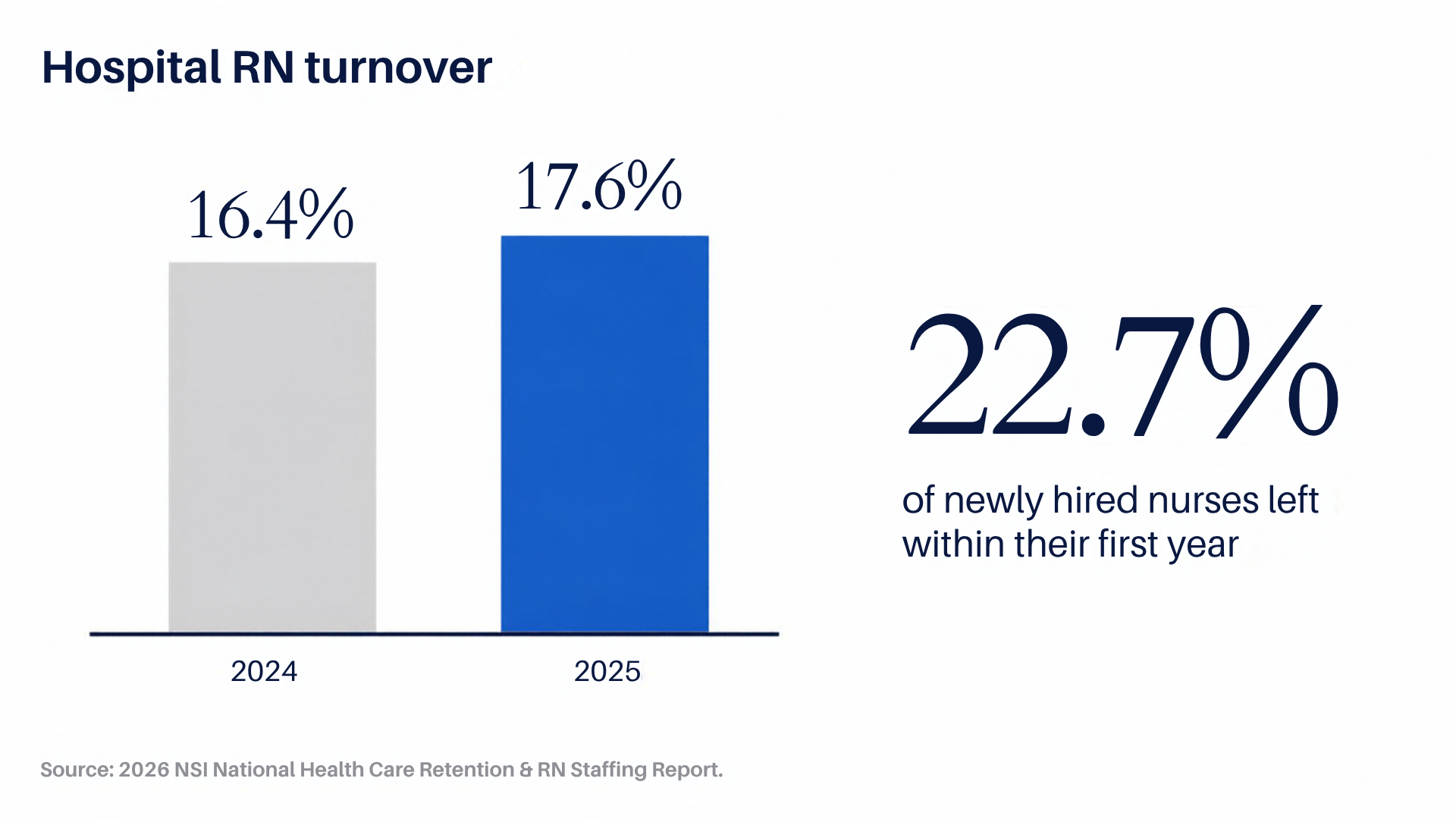
Contract rates have come down since 2022. The underlying problem has returned. The 2026 NSI National Health Care Retention Report found that hospital RN turnover rose to 17.6% in 2025, up from 16.4% the year before. Of newly hired nurses, 22.7% left within their first year, and those early exits made up 29% of all RN departures.
The average hospital in the survey carries 43 unfilled RN positions. It takes 78 days to fill an experienced nurse's role. A travel nurse costs about $189,758 a year, compared with $123,676 for an employed nurse.

These costs land on thin margins. Kaufman Hall reported that the median hospital operating margin fell to 2.1% in January 2026, while labor expense per calendar day rose 5% from a year earlier.
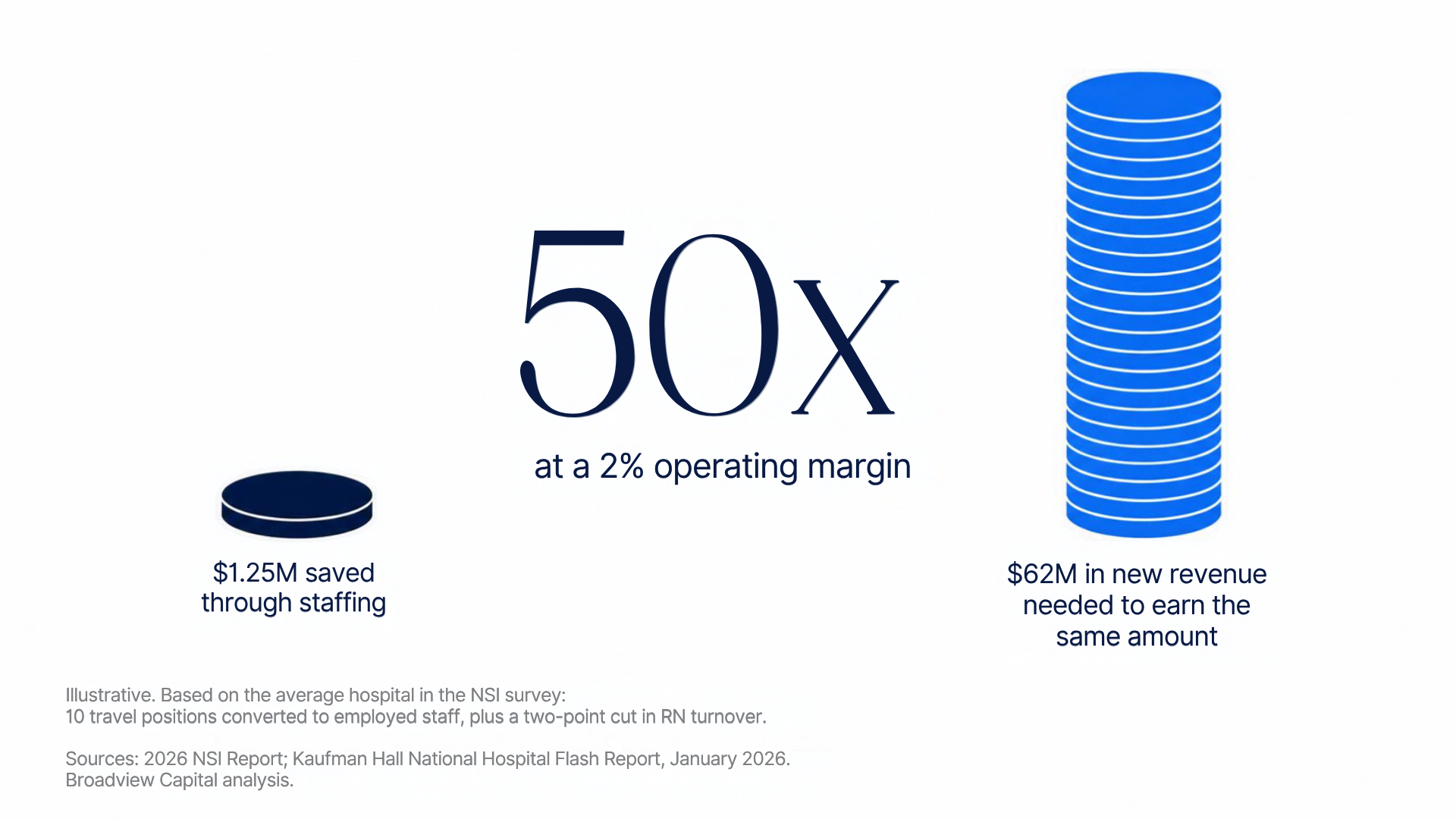
The arithmetic is worth doing. Take the average hospital in the NSI survey. If it fills 10 of its 43 open positions with employed nurses in place of travelers, it saves about $660,000 a year. If it cuts RN turnover by two points, NSI's figures put the saving at about $590,000 more. At a 2% margin, the hospital would need roughly $62 million in new revenue to earn the same $1.25 million.
Most hospitals still build schedules weeks ahead on a fixed grid. Managers then fill the daily gaps with overtime and agency staff. Each of those carries a premium, and each one adds strain to the nurses who stay.
A forecast changes the order of decisions. When a manager knows the expected census for each unit a week ahead, she can move float nurses before the gap appears and give staff more notice of changes. When the scheduler also holds competency records, it knows which nurses can safely cover which units. When it holds manager and retention data, it can flag the units where first-year nurses are most likely to quit.
This is the economic change in the Ascend model. The hospital plans its premium labor in advance, and planned labor costs less.
The strongest objection is the quality of the proof. Most published results for AI scheduling come from vendors and their clients. One vendor reports that Trinity Health cut contingent labor by 40% within six months. Figures like that are hard to test from the outside. The same vendors also note that results depend on connecting the tool to the systems where workforce data already sits, and many hospitals have not done that work. Nurses also resist schedules that they feel they no longer control.
Those doubts are fair, and they change how the case should be made. It does not need to rest on vendor figures. The NSI arithmetic above shows that small gains in retention and fill rates are worth more than most new service lines. The real risk sits in execution. Systems with strong nurse leadership and clean workforce data will capture the gains first.
As workforce tools merge into platforms, the economics of the sector will shift. Staffing agencies earn their highest margins on last-minute demand. Better forecasting reduces that demand, so agencies will keep more of their volume and less of their premium.
Software vendors will sort into platforms and point tools. A chief nursing officer would rather buy one contract that covers credentials and scheduling. A platform that holds all of that data is also harder to replace, so it gains pricing power over time.
Hospital systems will separate the most. The gap will show up first in premium labor as a share of total labor cost and in first-year RN turnover. Over time, it will also show in the share of licensed beds a system can staff on an ordinary weekday. Systems that improve those measures can grow volume without new construction.
For most of the last century, hospitals grew by adding beds. In this market, growth will come from keeping nurses past their first year and putting them where the patients are.
Sign up for our latest insights and firm announcements.
We respect your privacy and will not share your information.