
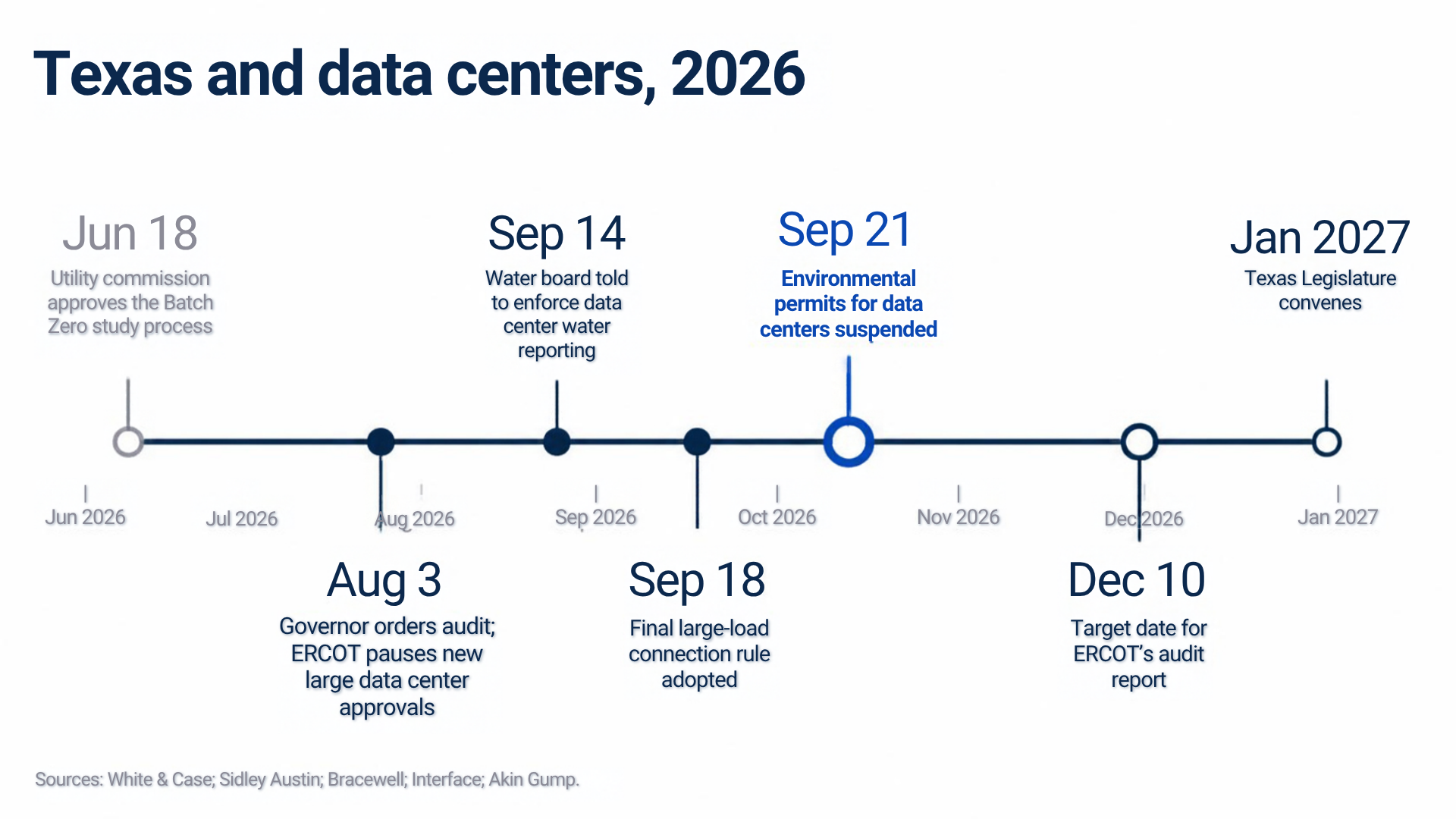
On September 21, Texas Governor Greg Abbott told the state's environmental regulator to stop issuing permits for data center projects. The order covers every data center seeking a permit from the Texas Commission on Environmental Quality, including projects that were not affected by earlier steps. It will stay in place until the state's grid operator completes its audit and the water board finishes its review of local water impacts.
It was the third step in seven weeks. On August 3, Abbott ordered the grid operator, ERCOT, and the utility commission to audit every data center in the queue for grid connections. ERCOT paused approvals to energize new large data centers. On September 14, he told the water board to enforce reporting rules on data center water use. ERCOT is now collecting information from developers in rounds expected to run through October and November, and it is targeting a report to the utility commission on December 10.
Most coverage treats this as a story about data center developers. We think the larger lesson is for investors in the industrial companies that supply them. Many of those companies now carry record backlogs. A growing share of that backlog depends on one type of customer in a small number of states, and Texas has just shown how quickly one government can delay it.
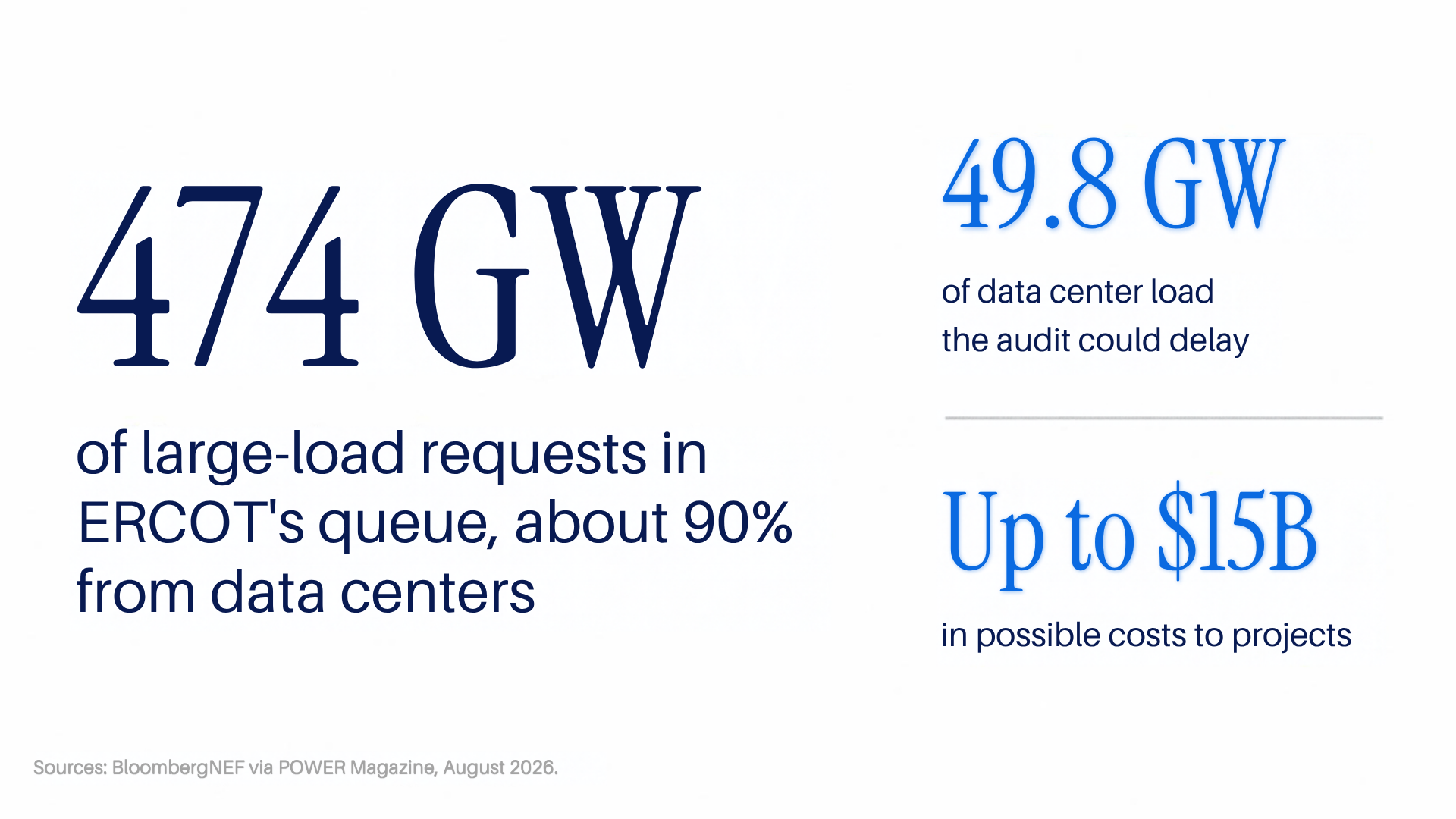
The numbers are large. ERCOT's queue holds about 474 gigawatts of new large-load requests, and about 90% of that comes from data centers. BloombergNEF has estimated that the audit could delay 49.8 gigawatts of data center load and cost projects up to $15 billion.
The state has also tightened the rules for the projects that do proceed. On September 18, the utility commission adopted its final rule for connecting large loads to the grid, which sets financial commitments that developers must meet. The Texas Legislature meets again in January 2027, and further changes are likely.
The governor's office has said the measures are not a ban on data centers. The projects that pass the audit will move forward. The question for suppliers is when.
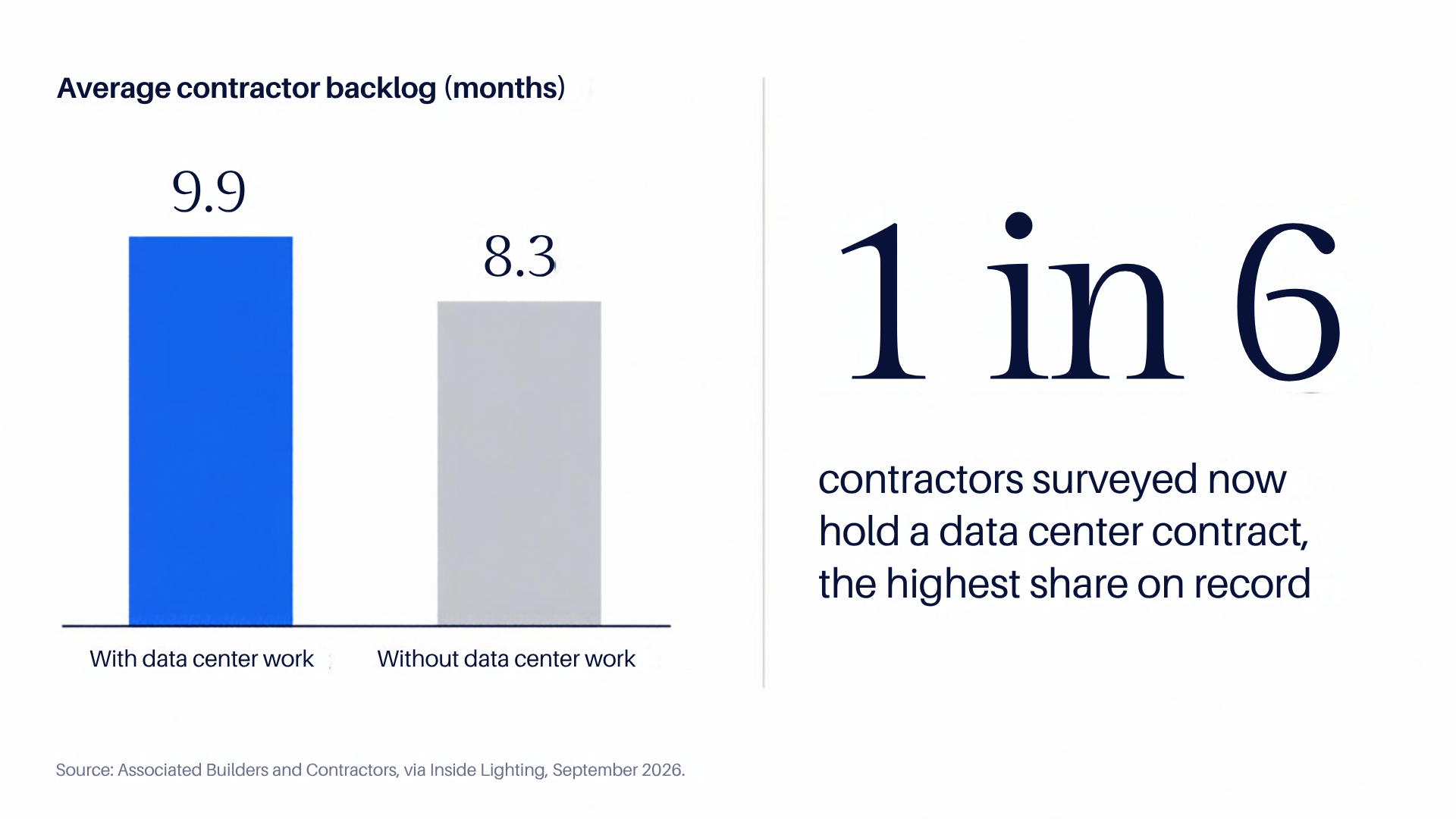
Industrial suppliers have benefited more than most from the data center boom. Contractors with data center work report an average backlog of 9.9 months, compared with 8.3 months for those without it, according to the Associated Builders and Contractors. About one in six of its members now holds a data center contract, the highest share it has recorded.
Electrical equipment makers, cooling suppliers, steel fabricators, and construction firms all report strong order books. Some of that work is in states with clear rules and available power. A large share is concentrated in a few markets, and Texas is one of the largest.
A long backlog looks like safe revenue. Its safety depends on whether the customers behind it can build on schedule. When a state pauses permits or grid connections, the orders do not disappear at once, but deliveries slip and some projects are cancelled.
The industrial economy has seen this pattern before. In the late 1990s, telecom carriers spent heavily on networks to meet expected internet demand. Equipment makers such as Lucent and Nortel built record backlogs on those orders. When carriers cut spending sharply in 2001, the suppliers' revenue fell much faster than their backlogs had suggested it would, and both companies shrank dramatically.
The data center cycle differs in important ways. The largest buyers are profitable technology companies, and demand for computing is real. The lesson still applies. A supplier's backlog carries the risk of its customers' plans, and a backlog concentrated on one kind of customer can turn over faster than investors expect.
The strongest objection is that the pause is temporary. The audit has a timeline, the projects that pass will proceed, and the underlying demand for computing has not changed. Investors who discount data center backlogs may miss the next leg of growth.
That view is reasonable for the industry as a whole. It is less reliable for any one company. Timing matters to a supplier's results. A six-month delay can turn a strong year into a weak one and force a company to carry inventory it built for customers who are not ready. Demand that returns in 2027 does not pay this year's bills.
The Texas measures suggest a sharper way to judge industrial companies.
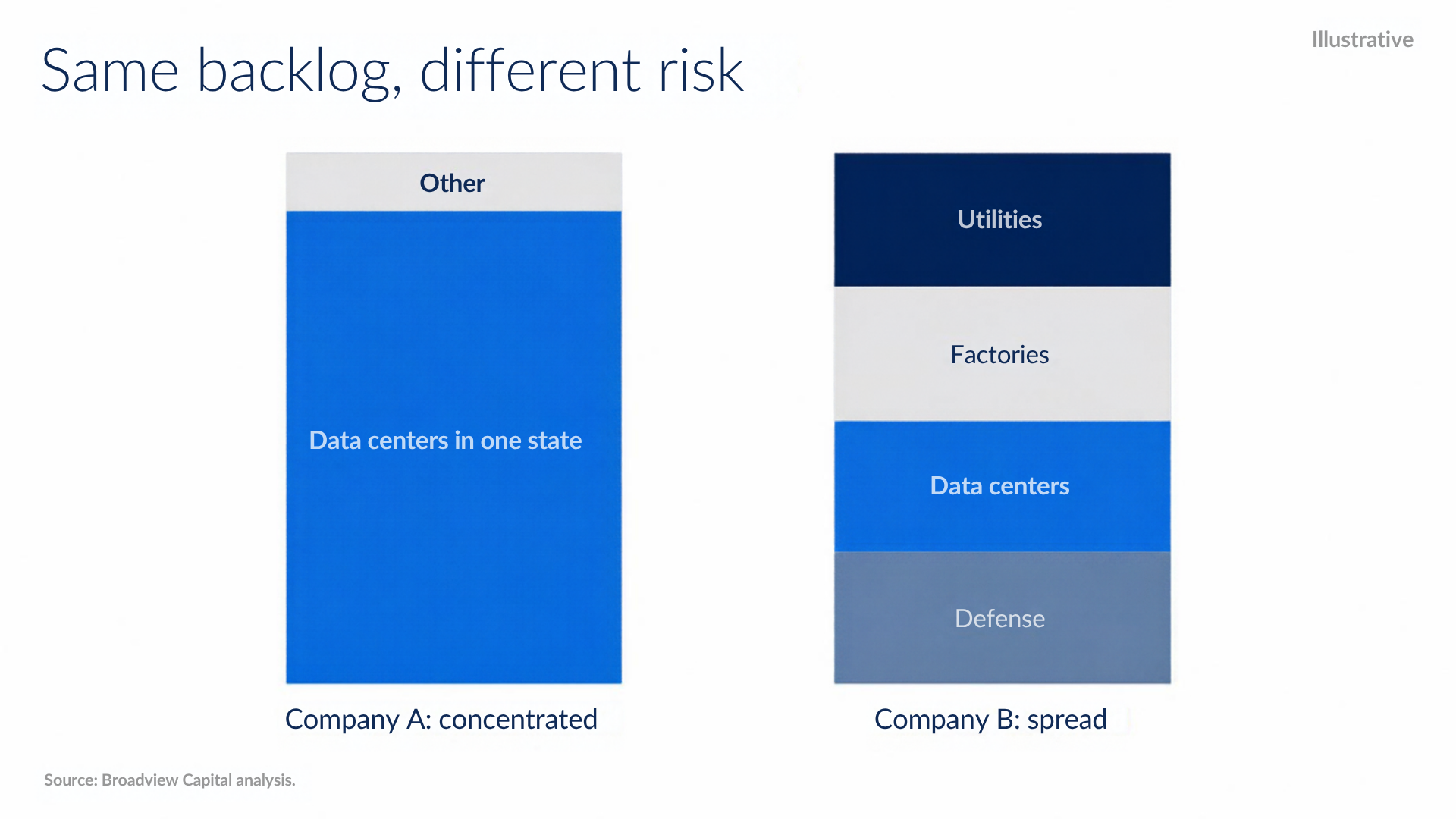
First, break down the backlog. Ask what share of orders depends on data centers and which states those projects sit in. Orders that still need an approved grid connection deserve particular attention. A backlog spread across utilities, factories, defense, and data centers is worth more than a larger one that rests on a single sector.
Second, read the contracts. Cancellation terms and deposits decide who carries the cost of a delay. A supplier that holds meaningful deposits and clear cancellation fees is better protected than one that builds to order on credit.
Price the regulatory risk as well. States can pause permits or change cost rules within weeks, as Texas has shown. When valuing a supplier, the timing of its data center revenue should carry a discount that reflects how much of it depends on regulators in a few states.
An industrial backlog has long been read as one of the safest numbers in a company's accounts. The Texas pause is a reminder that a backlog is a list of promises, and each promise is only as good as the customer's ability to build.
A backlog is a list of promises, and each promise is only as good as the customer's ability to build.
Sign up for our latest insights and firm announcements.
We respect your privacy and will not share your information.